แค่ 5 ประโยคนี้ก็ช้อปตลาดเกาหลีได้เหมือนขาประจำ
ตลาดดั้งเดิมของเกาหลีคือประสบการณ์ที่กระตุ้นทุกประสาทสัมผัสแบบสุดๆ ในทางที่ดี แต่แม่ค้าจะเรียกเราตลอด แล้วเราก็อยากถามทุกอย่างที่เห็น ห้าประโยคนี้ครอบคลุมทั้งเส้นทาง ตั้งแต่เดินดูเฉยๆ อย่างสุภาพ คำถามที่อยากรู้ เช็คราคา ต่อรองแบบเป็นมิตร และคำบอกลาที่ทำให้แม่ค้ายิ้มกว้าง ไม่ต้องพูดคล่อง แค่รู้คำวิเศษเหล่านี้ก็พอ
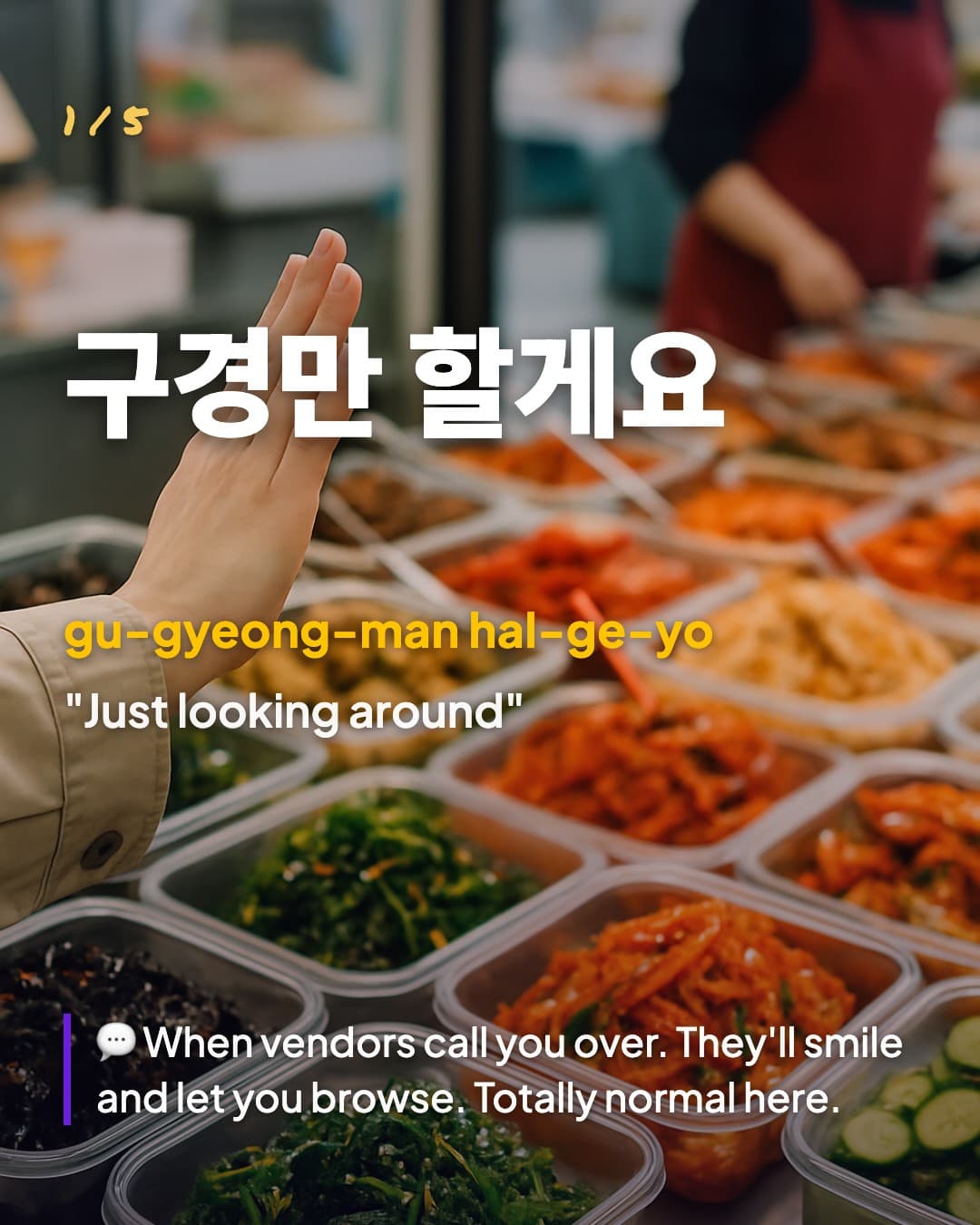
구경만 할게요 — Just looking around
gu-gyeong-man hal-ge-yo · แม่ค้าในตลาดดั้งเดิมจะเรียกคนที่เดินผ่านตลอด โดยเฉพาะนักท่องเที่ยวต่างชาติ ถ้าอาจุมมะโบกมือเรียกให้มาดูร้านบันชันแต่ยังไม่พร้อมซื้อ ประโยคนี้คือทางออกแบบสุภาพ พูดพร้อมยิ้มแล้วเดินต่อไปได้เลย ไม่ต้องเขิน ไม่ต้องกดดัน แม่ค้าคุ้นเคยกับเรื่องนี้ดี บางทีก็ยิ้มกลับมาหรือพูด 'โอเค โอเค!' แบบเป็นกันเอง
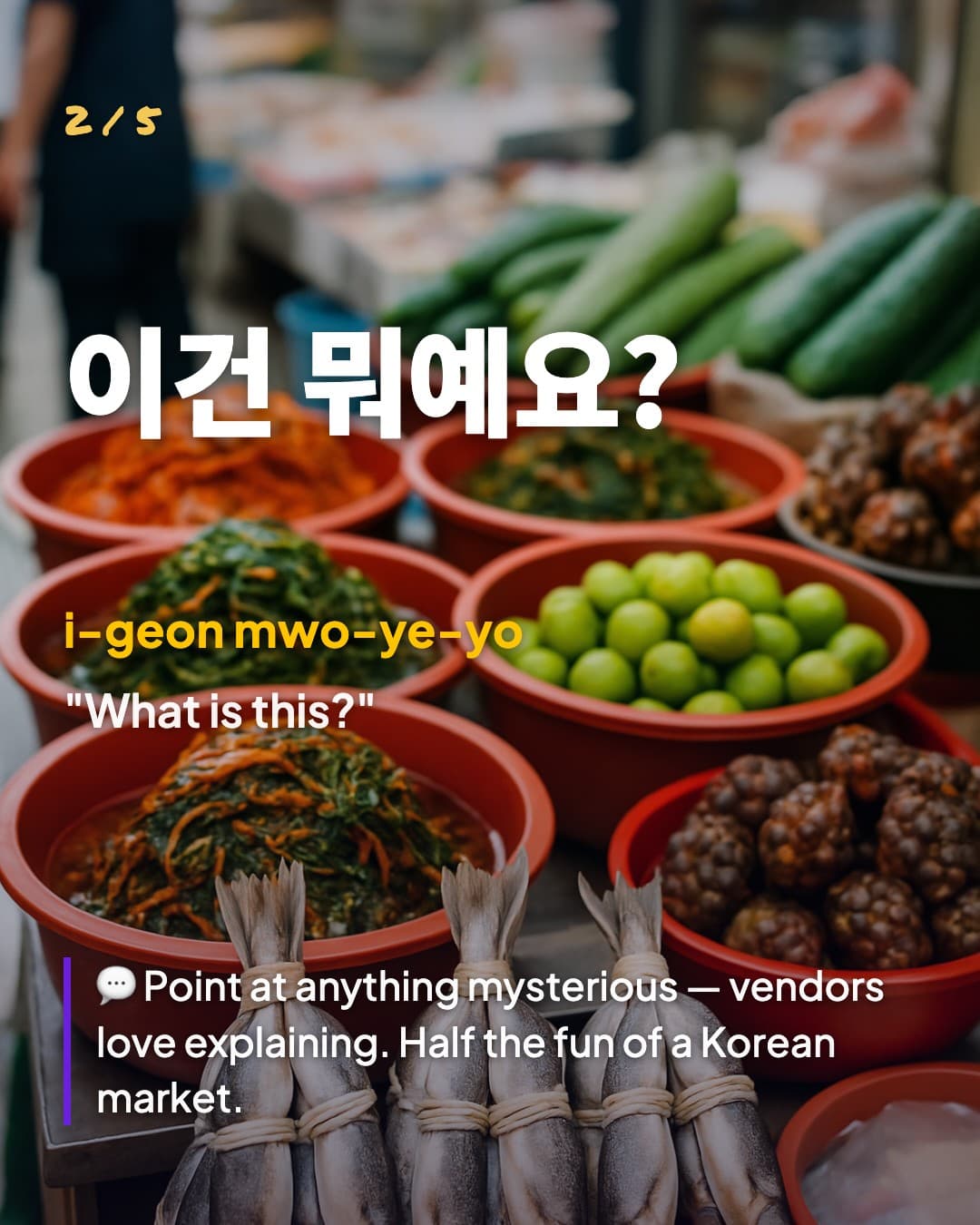
이건 뭐예요? — What is this?
i-geon mwo-ye-yo · ในตลาดมีของแห้งแปลกๆ ที่ไม่เคยเห็น บันชันปริศนา หรือขนมข้างทางที่ไม่รู้จักเต็มไปหมด ชี้ไปที่ของนั้นแล้วถามคำนี้ หน้าแม่ค้าจะสว่างขึ้นทันที บางทีก็สอนวิธีทำแบบย่อๆ ให้หรือให้ชิมฟรีเลย มันเปลี่ยนช่วงเวลาซื้อขายธรรมดาให้กลายเป็นบทสนทนาจริงๆ แล้วอาจได้เจอวัตถุดิบที่ชอบใหม่ในชีวิตก็ได้
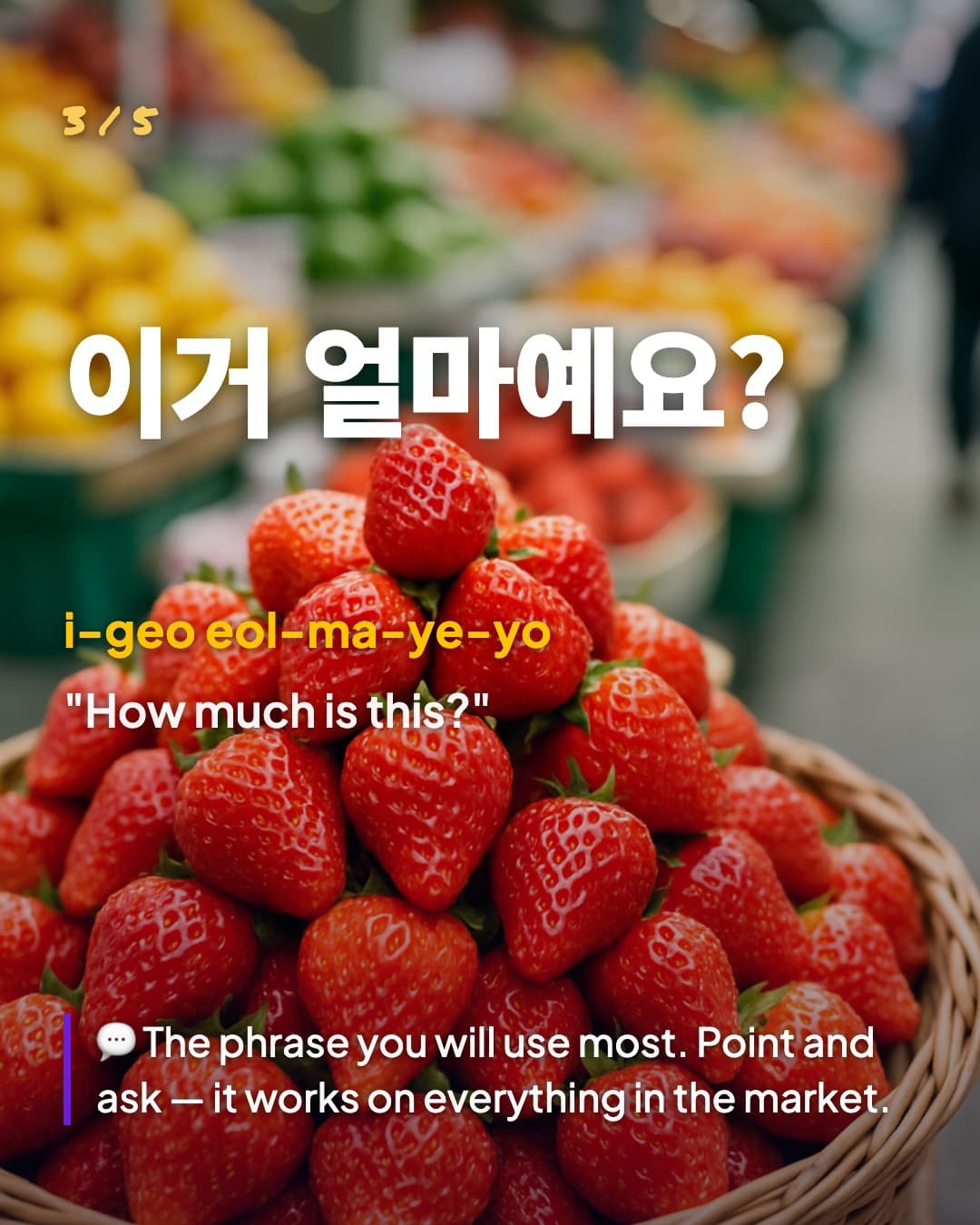
이거 얼마예요? — How much is this?
i-geo eol-ma-ye-yo · ไม่มีป้ายราคา ปกติมาก ตั้งแต่ปลาแห้งจนถึงถุงเท้าต้องถามหมด แม่ค้าจะบอกราคาต่อหน่วยหรือกดโชว์ในเครื่องคิดเลขให้ดู ใช้ประโยคนี้ซ้ำๆ ได้ตอนเดินเทียบร้านต่างๆ เป็นเรื่องปกติ ไม่ใช่ไม่มีมารยาท จะได้คำตอบเร็วกว่าการพยายามหาป้ายราคาที่เขียนไว้ แล้วยังเปิดทางไปสู่ประโยคที่สี่ได้ด้วย
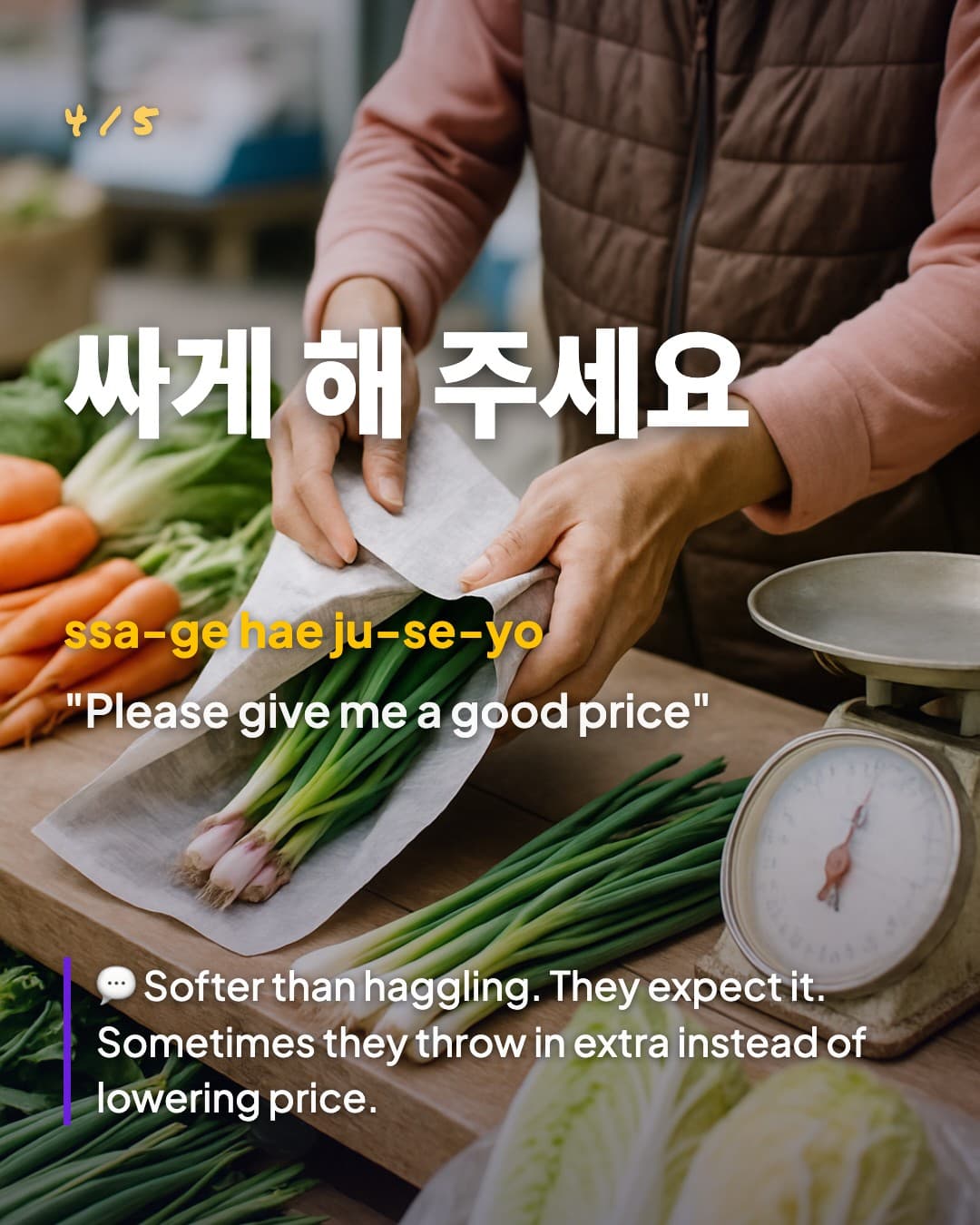
싸게 해 주세요 — Please give me a good price
ssa-ge hae ju-se-yo · นี่ไม่ใช่การต่อรองแบบดุดัน แต่เป็นจังหวะปกติของตลาด พูดหลังได้ยินราคาแล้ว โดยเฉพาะถ้าซื้อหลายอย่างหรือของแพงอย่างโสมหรือผ้าฮันบก แม่ค้าอาจลดให้พันวอน ปัดเศษลง หรือแถมกระเทียมพริกเพิ่มให้ ความสัมพันธ์สำคัญกว่าส่วนลด และการถามอย่างสุภาพก็แสดงว่าเรารู้จังหวะของตลาดดี
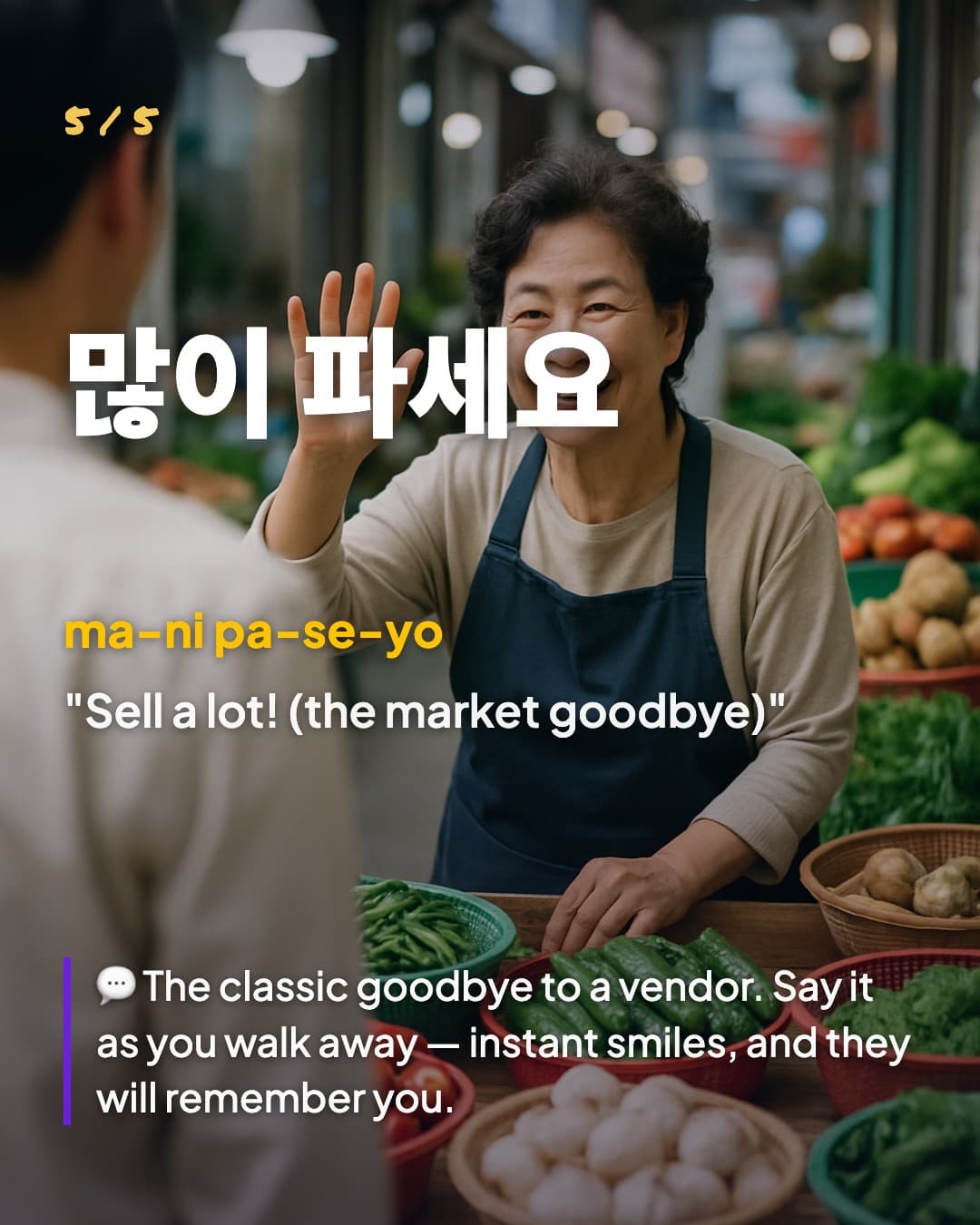
많이 파세요 — Sell a lot! (the market goodbye)
ma-ni pa-se-yo · ไม่ว่าจะซื้อของไปแล้วหรือแค่คุยเล่นแล้วเดินจากไป ให้พูดคำนี้ทิ้งท้ายก่อนเดินออก มันคือคำอวยพรให้ขายดีในวันนั้น แบบที่ลูกค้าเกาหลีจริงๆ พูดกัน แม่ค้าจะซาบซึ้งจริงๆ มักตะโกนตอบกลับว่า 'ขอบคุณค่ะ!' หรือ 'มาอีกนะ!' ตอนนั้นเราจะรู้สึกเหมือนเป็นขาประจำ เพราะเราก็ทำตัวเหมือนขาประจำไปแล้ว
พูดให้ออกเสียงถูก
- เสียง 'ㅓ' ในคำว่า 뭐 (mwo) และ 얼마 (eol-ma) คล้าย 'u' ในคำว่า burn คนพูดอังกฤษมักออกเสียงพลาดตรงนี้ แต่แม่ค้าก็เข้าใจแม้ไม่สมบูรณ์แบบ
- ทุกประโยคนี้ลงท้ายด้วย 요 แบบสุภาพ เหมาะกับการพูดกับแม่ค้าที่ไม่รู้จักกันมาก่อน ห้ามตัดออกเด็ดขาด ไม่งั้นจะดูกันเองเกินไป
- ไม่ต้องห่วงเรื่องเสียงวรรณยุกต์ ภาษาเกาหลีไม่มีวรรณยุกต์แบบภาษาจีน พูดเรียบๆ ก็สื่อสารได้เข้าใจเหมือนกัน
คำถามที่พบบ่อย
- แม่ค้าในตลาดดั้งเดิมพูดภาษาอังกฤษได้ไหม
- แม่ค้าสูงอายุมักพูดไม่ได้ ส่วนคนรุ่นใหม่ในย่านอย่างควังจังอาจรู้ชื่ออาหารบ้าง ถ้ามีคำถามเจาะจงนอกเหนือจากห้าประโยคนี้ ใช้แอปปาปาโก้หรือเนเวอร์แปลภาษาช่วยได้ดี
- ควรพกเงินสดหรือใช้บัตรได้เลย
- พกแบงก์ย่อยหลักหมื่นวอนไปดีที่สุด แม่ค้าแต่ละแผงมักไม่มีเครื่องรูดบัตร แม้บางตลาดจะมีตู้จ่ายเงินรวมให้บ้าง ควรถอนเงินก่อนเข้าตลาด เพราะตู้ ATM ข้างในมักหาไม่ง่าย
- ถ้าเผลอทำแม่ค้าไม่พอใจโดยไม่ตั้งใจจะทำยังไง
- วัฒนธรรมตลาดค่อนข้างให้อภัยกับนักท่องเที่ยวต่างชาติที่เห็นได้ชัด ยิ้มขอโทษก็แก้ปัญหาได้ส่วนใหญ่แล้ว แม่ค้าเห็นค่าความพยายามพูดเกาหลีของเรา และไม่ค่อยถือโทษนักท่องเที่ยวที่ตั้งใจแสดงความเคารพอยู่แล้ว

ถาม Della
โซล

