現地の人のように値段を聞く — ぎこちない指差しや当てずっぽうはもう不要
値段が分からないまま韓国でお買い物をすると、そこからストレスが始まります。南大門市場でも、屋台でも、コンビニでも、この5フレーズがあれば値段に関するどんな場面にも対応できます。完璧な韓国語は必要ありません。聞いて、確認して、損をしない程度で十分です。
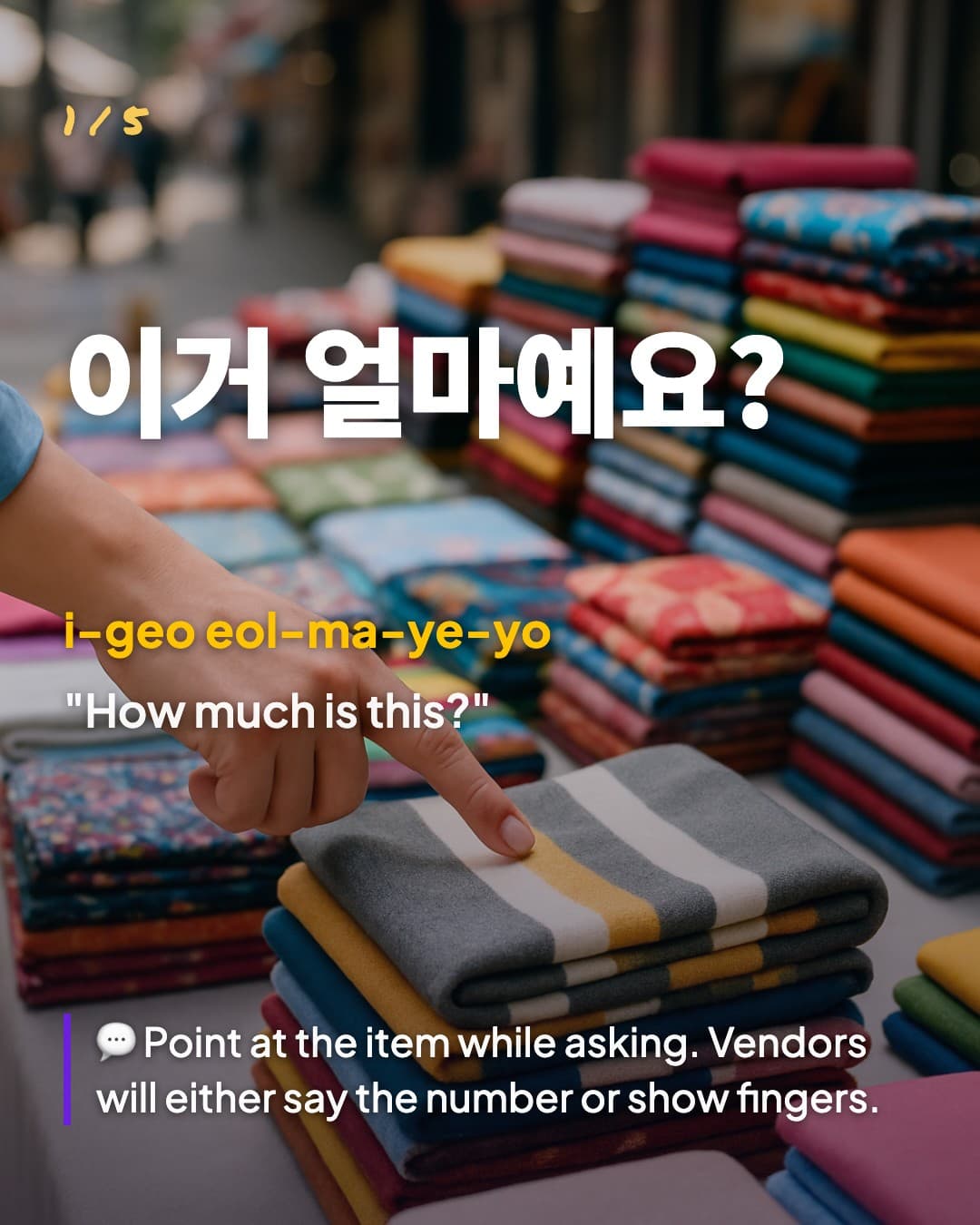
이거 얼마예요? — How much is this?
i-geo eol-ma-ye-yo ・ 値札のない商品を手に取ったときに使いましょう。伝統市場や小さなお店では本当によくあることです。店の人は韓国語で値段を言うか、千ウォン単位を指で示してくれます。商品を手に持っていれば、何について聞いているかすぐ分かってもらえます。
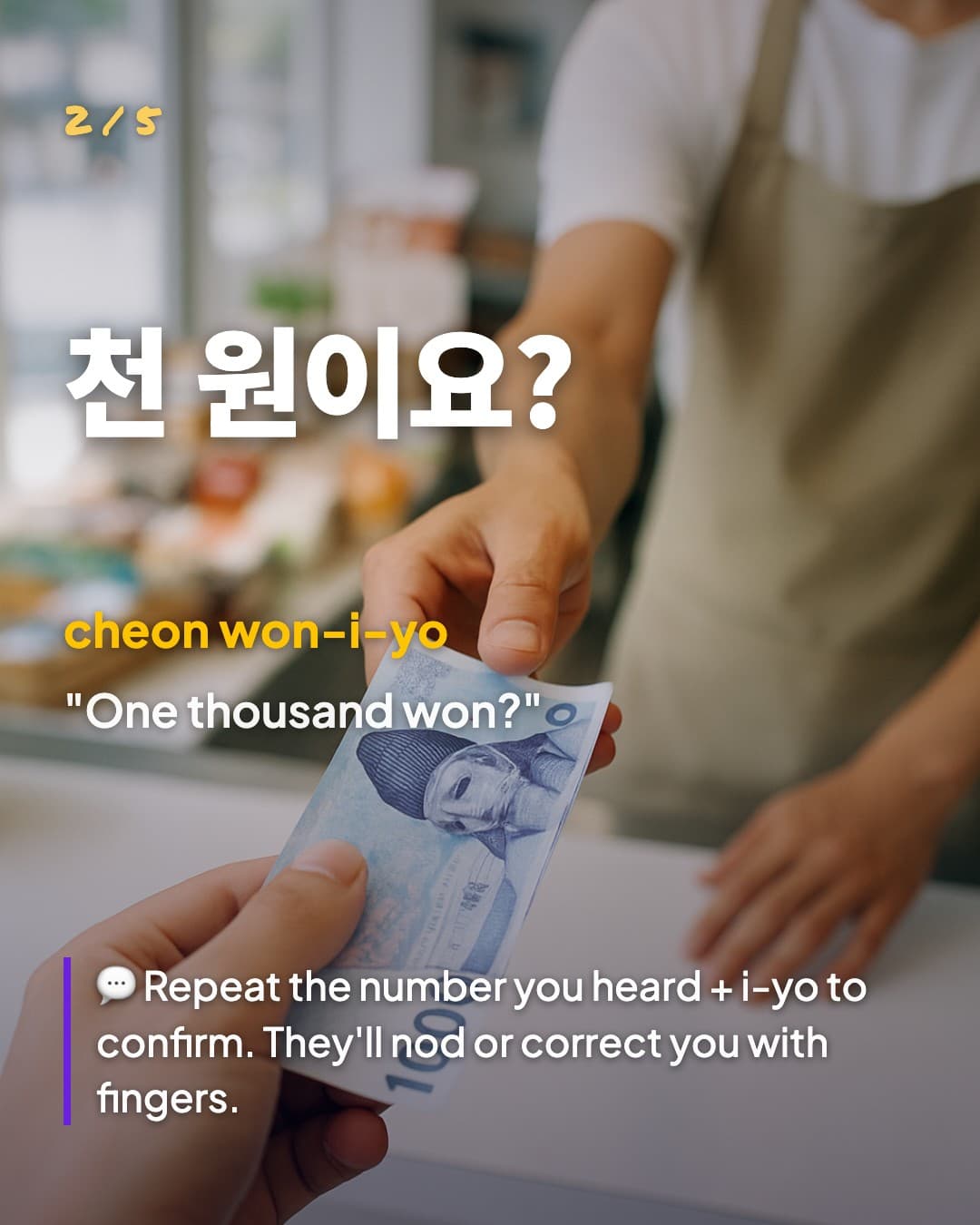
천 원이요? — One thousand won?
cheon won-i-yo ・ 韓国語の数字は耳慣れないと早口に聞こえて、聞き取りづらいものです。聞いた数字を質問として繰り返すと確認できて、レジで恥をかくことも防げます。店の人も支払いミスを防げるので歓迎してくれます。間違っていたら、指で示したりゆっくり言い直したりして、すぐに直してくれます。
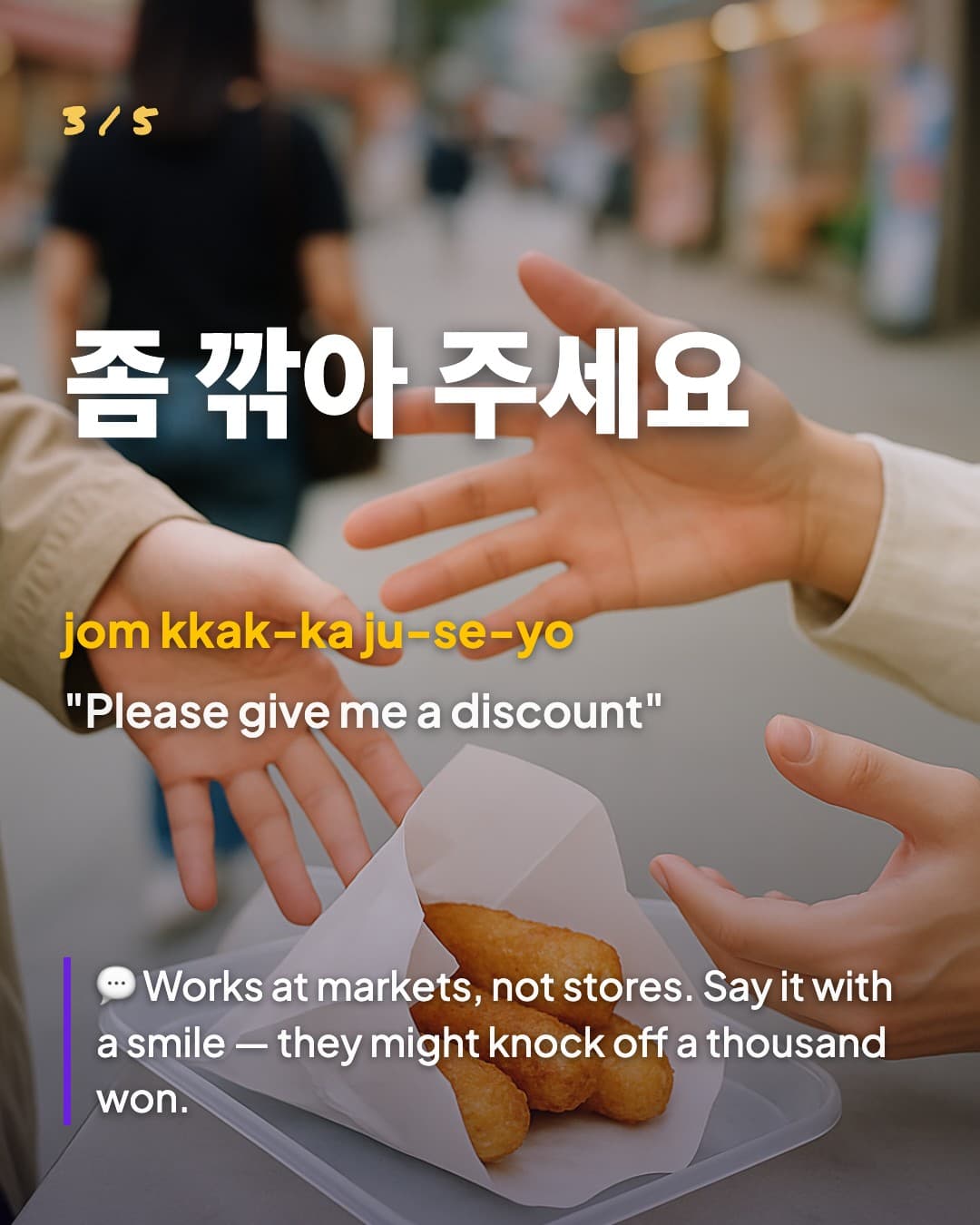
좀 깎아 주세요 — Please give me a discount
jom kkak-ka ju-se-yo ・ これは広蔵市場や東大門のような伝統市場でのみ通じるお願いで、値段が固定されているチェーン店やデパートでは使えません。タイミングが大事で、値段を言われたあと、お金を出す前に聞くのがコツです。応じてもらえなくても、頼んだ姿勢自体を笑って認めてくれます。
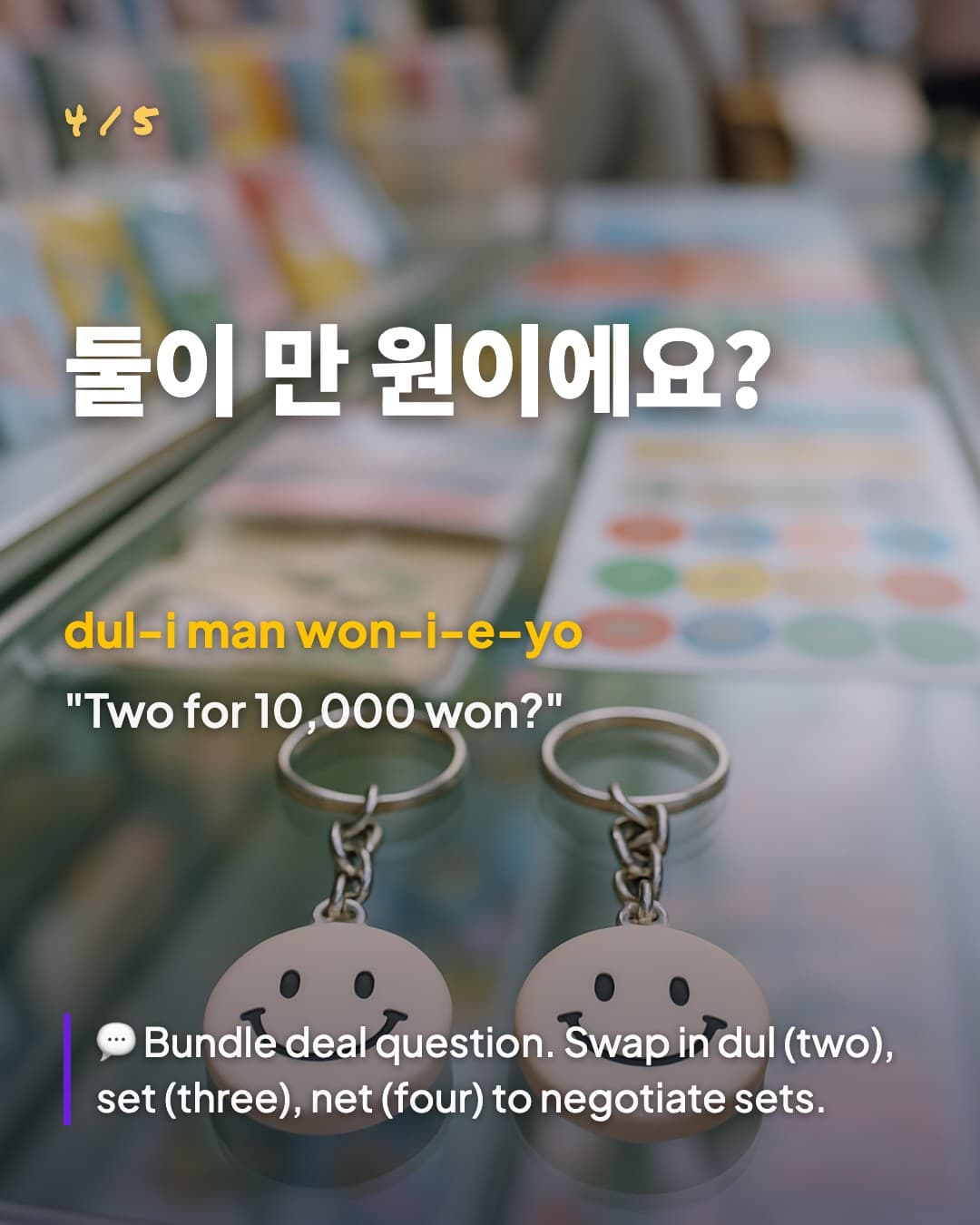
둘이 만 원이에요? — Two for 10,000 won?
dul-i man won-i-e-yo ・ 屋台のおやつや靴下は、まとめ買いだと安くなることが多いのですが、店の人が最初から教えてくれるわけではありません。自分からセット価格を提案してみると、特に一日の終わりで在庫を減らしたいときには「いいよ」と返ってくることがあります。買う個数に合わせて数字を変えて、3個でも5個でも状況に合わせて言ってみましょう。
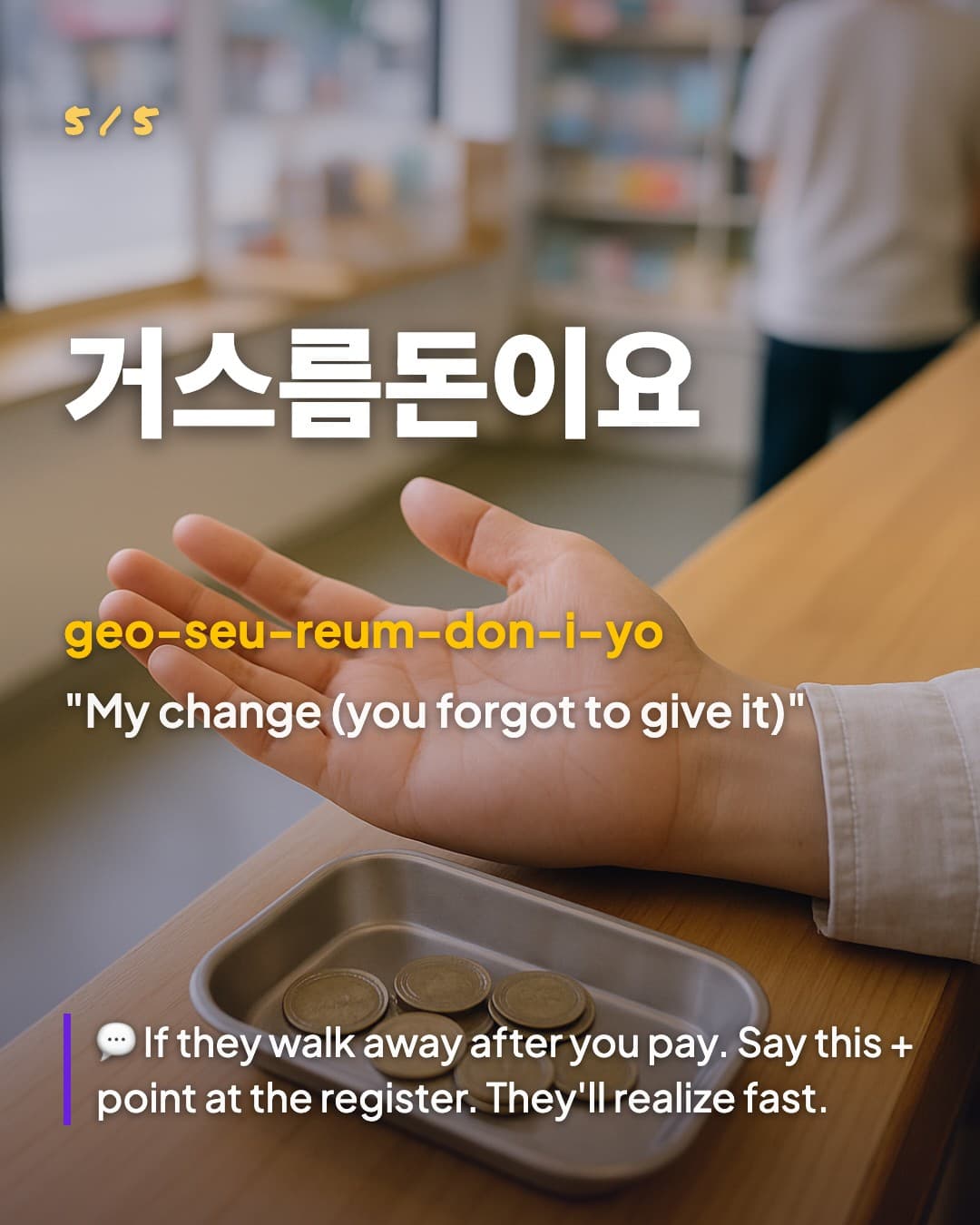
거스름돈이요 — My change (you forgot to give it)
geo-seu-reum-don-i-yo ・ 混雑した市場や屋台では、店の人が同時に何人もの客を相手にしていて、支払い後のおつりを渡し忘れることがあります。これは騙そうとしているわけではなく、単にてんてこ舞いなだけです。レジや自分の手のひらを指しながらこう言えば、すぐに気づいてもらえて、謝りながらおつりを渡してくれます。
正しく聞こえる発音のコツ
- 文末の「요」は丁寧な言い方にしてくれるので、急いでいても絶対に省略しないでください。
- 韓国語の数字は母音が素早くつながります。「얼마」は間を空けた「uhl-mah-ah」ではなく、一息の「uhl-mah」のように聞こえます。
- 値段を確認するときは、英語の疑問文のように文末を少し上げて発音しましょう。
よくある質問
- コンビニのスタッフは値段を英語で伝えてくれますか?
- CUやGS25のような大手チェーンでは、数字で書かれた値札があって読めますし、レジには合計額がデジタル表示されます。スタッフは簡単な英語の数字くらいは分かるかもしれませんが、全部スキャンで済むので、やり取りはほとんど無言で完了します。
- 市場での買い物には現金とカード、どちらを持っていくべきですか?
- 伝統市場では現金が好まれます。特に1万ウォン未満の少額の買い物ではそうです。南大門のような場所では、現金で払うと値段を良くしてくれたり、おまけをつけてくれたりすることがよくあります。大きな店ではカードも使えますが、現金の方がスムーズです。
- それでも言われた数字が分からないときはどうしますか?
- 電卓アプリを開いたスマホを渡して数字を入力してもらうか、大きい額の紙幣をそのまま出してみましょう。店の人が正しい金額を受け取っておつりを渡してくれるので、そのときに紙幣の数字を見れば、次に活かせます。

Solarに聞いてみる
ソウル

