Five phrases. Every tteokbokki cart. Zero awkward pointing.
Seoul's street food scene moves fast. Vendors call out, crowds jostle, and you've got about ten seconds to decide and order. You don't need fluent Korean; you need these five lines. They cover spice checks, ordering, eating in or taking out, and the one compliment that sometimes scores you free extra.
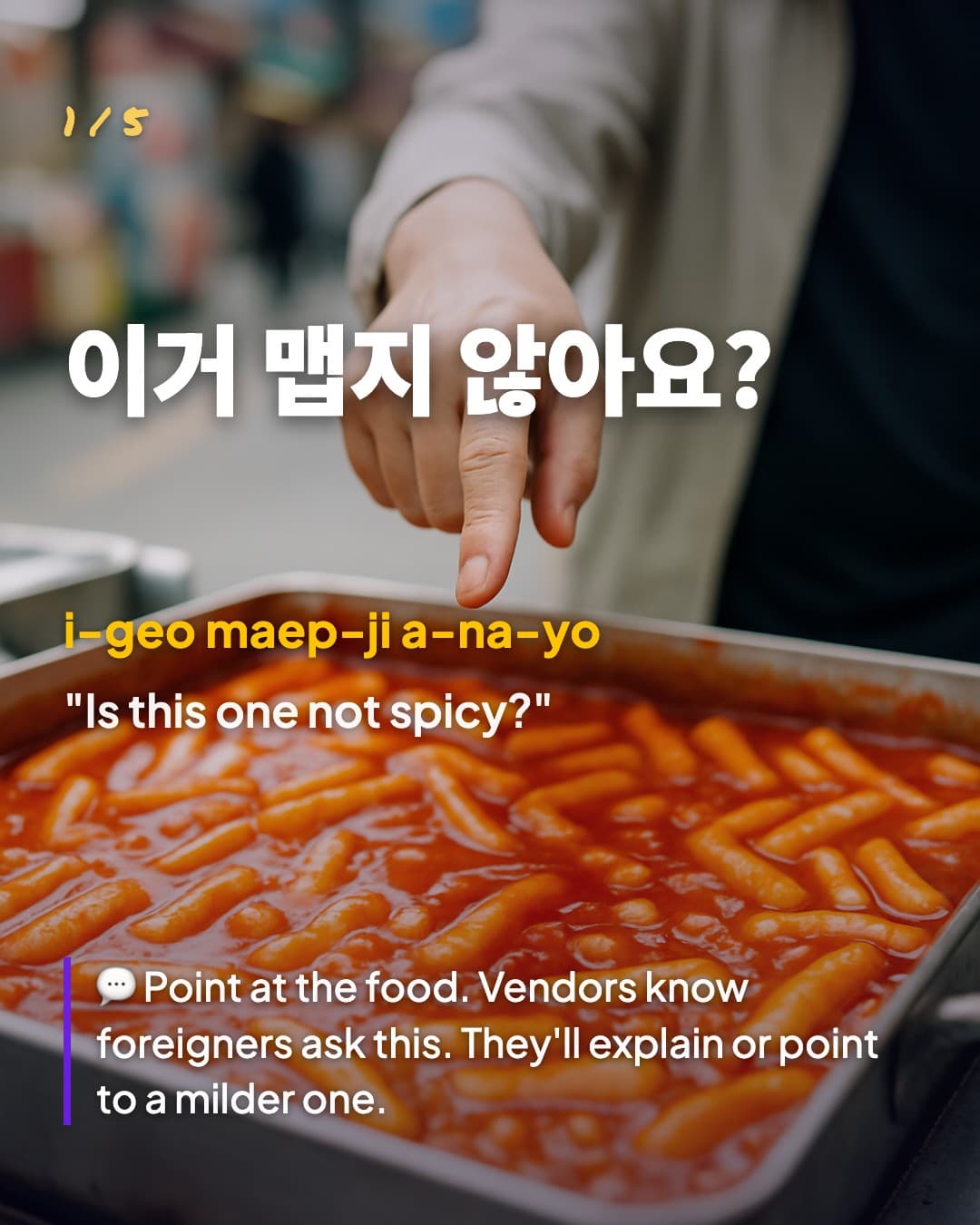
이거 맵지 않아요? — Is this one not spicy?
i-geo maep-ji a-na-yo · Use this before you commit, especially at tteokbokki or sundae carts. Point directly at the dish while you ask. Most vendors will answer with a hand gesture. A little wiggle means medium, a strong wave means very. If you look nervous, they'll often point you toward the egg bread or hotteok instead.
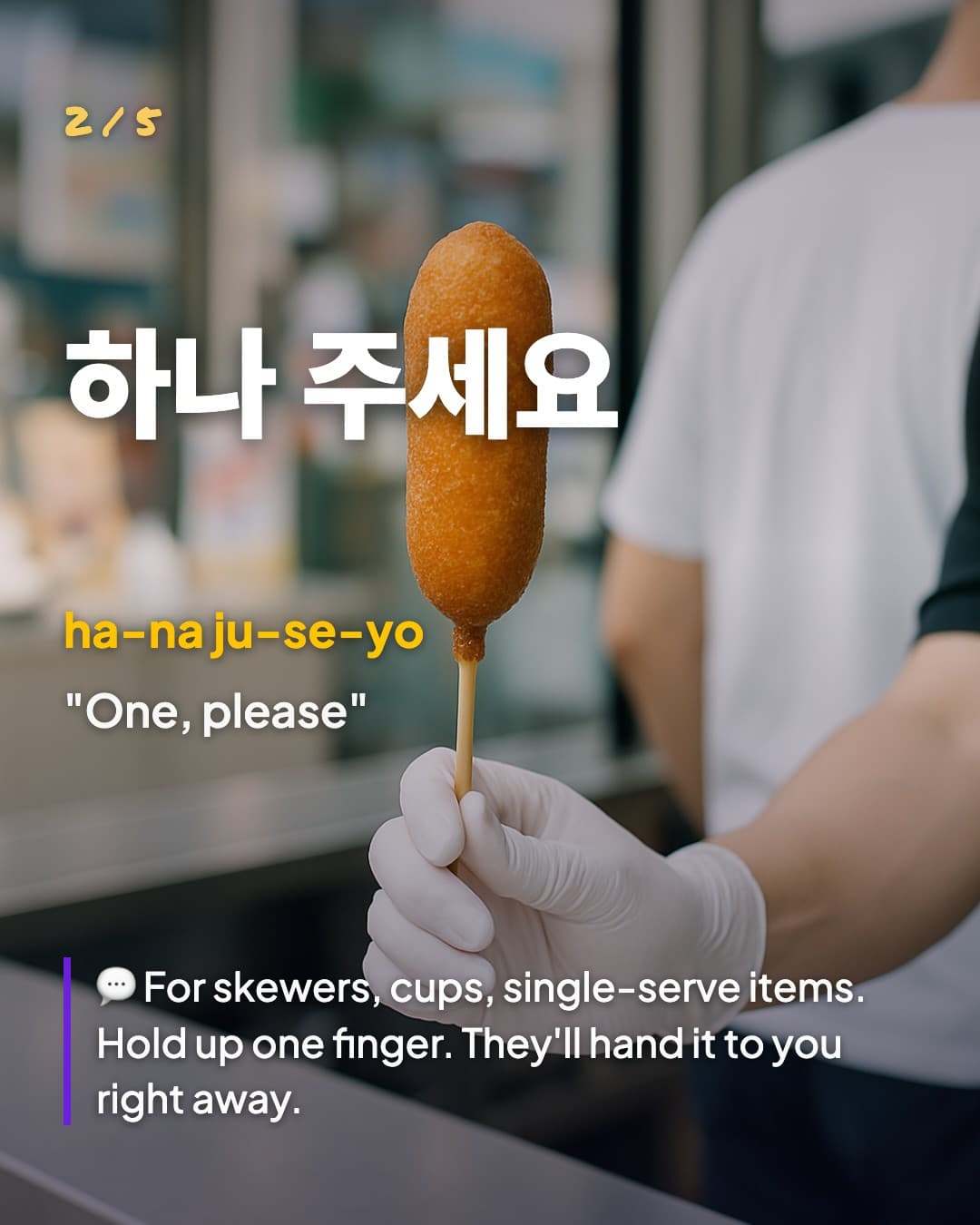
하나 주세요 — One, please
ha-na ju-se-yo · Perfect for anything sold by the piece: skewers, hotteok, bungeoppang, corn cups. Hold up your index finger as you say it. The combo is universal. You'll have it in your hand within seconds. If you want two, say dul ju-se-yo, but one is safer when you're cart-hopping.
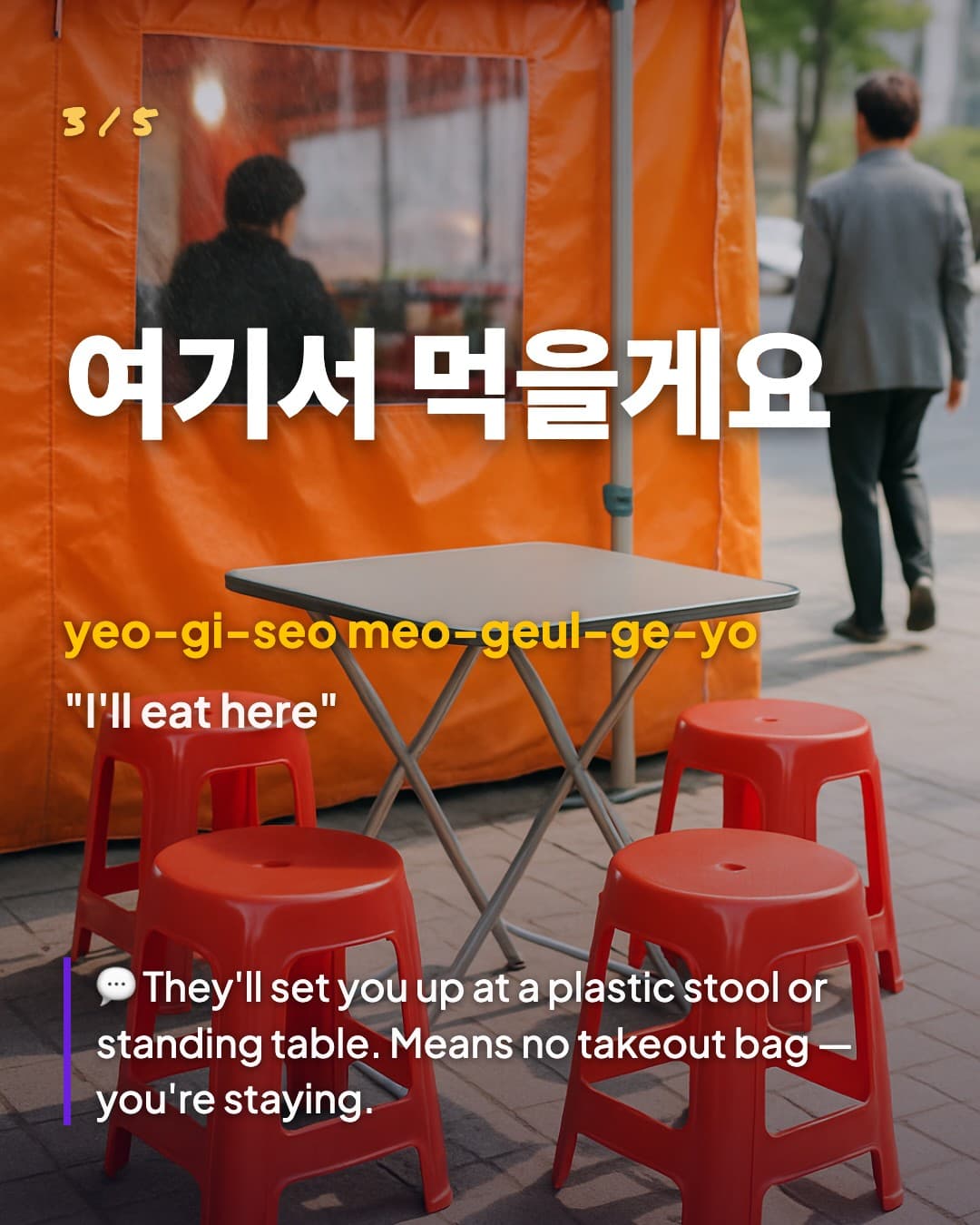
여기서 먹을게요 — I'll eat here
yeo-gi-seo meo-geul-ge-yo · Say this right after ordering if you see plastic stools or a tiny counter nearby. The vendor will hand you real utensils instead of a wooden skewer, sometimes bring napkins, and expect you to return everything when done. It's common at odeng and tteokbokki spots. Don't wander off with the bowl.
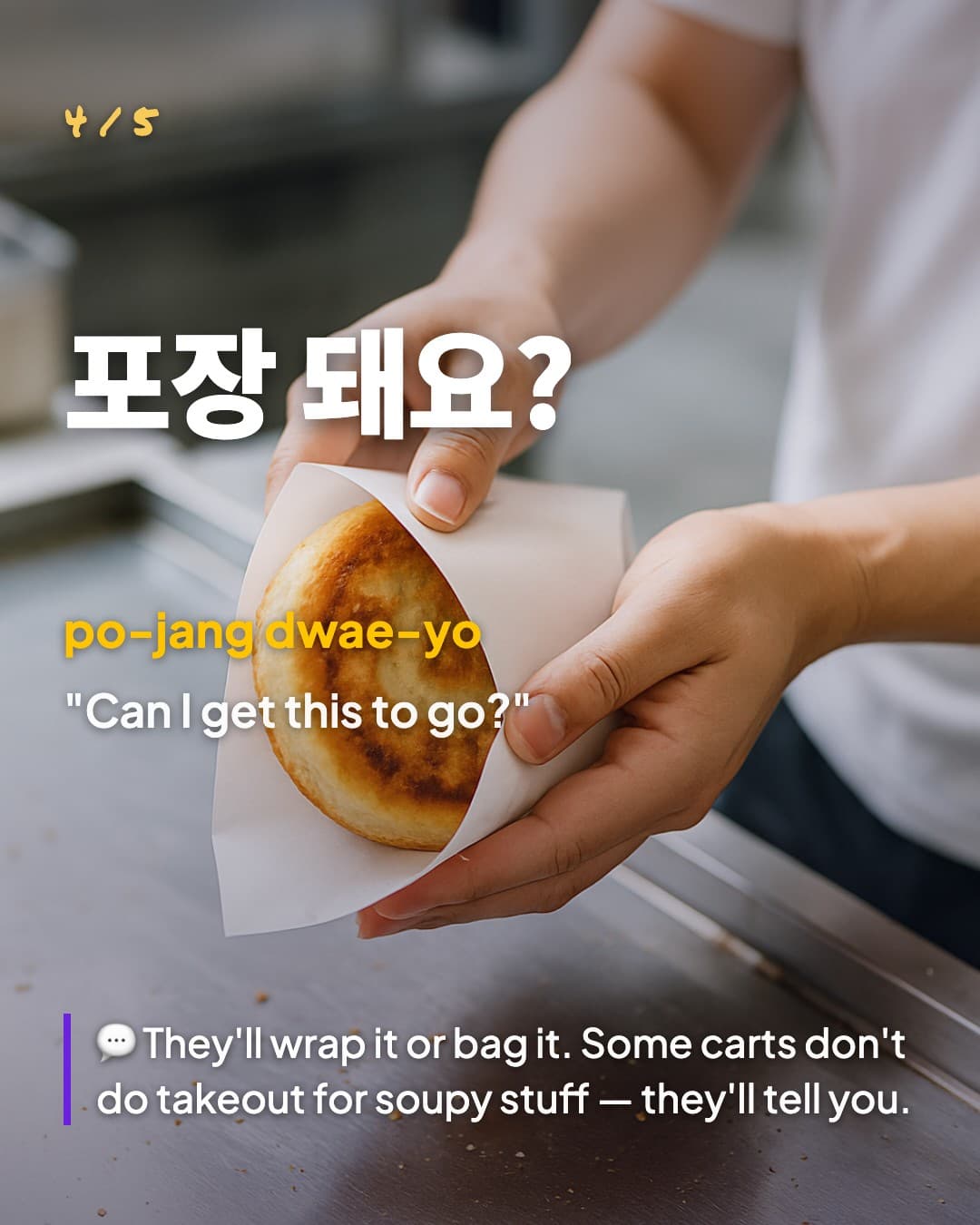
포장 돼요? — Can I get this to go?
po-jang dwae-yo · Ask this if you want to walk and eat, or take food back to your hotel. They'll use plastic wrap, foil, or a tied bag. Fried stuff and skewers always work. Soup-based dishes like odeng broth usually can't be packed. The vendor will shake their head and suggest eating there instead.
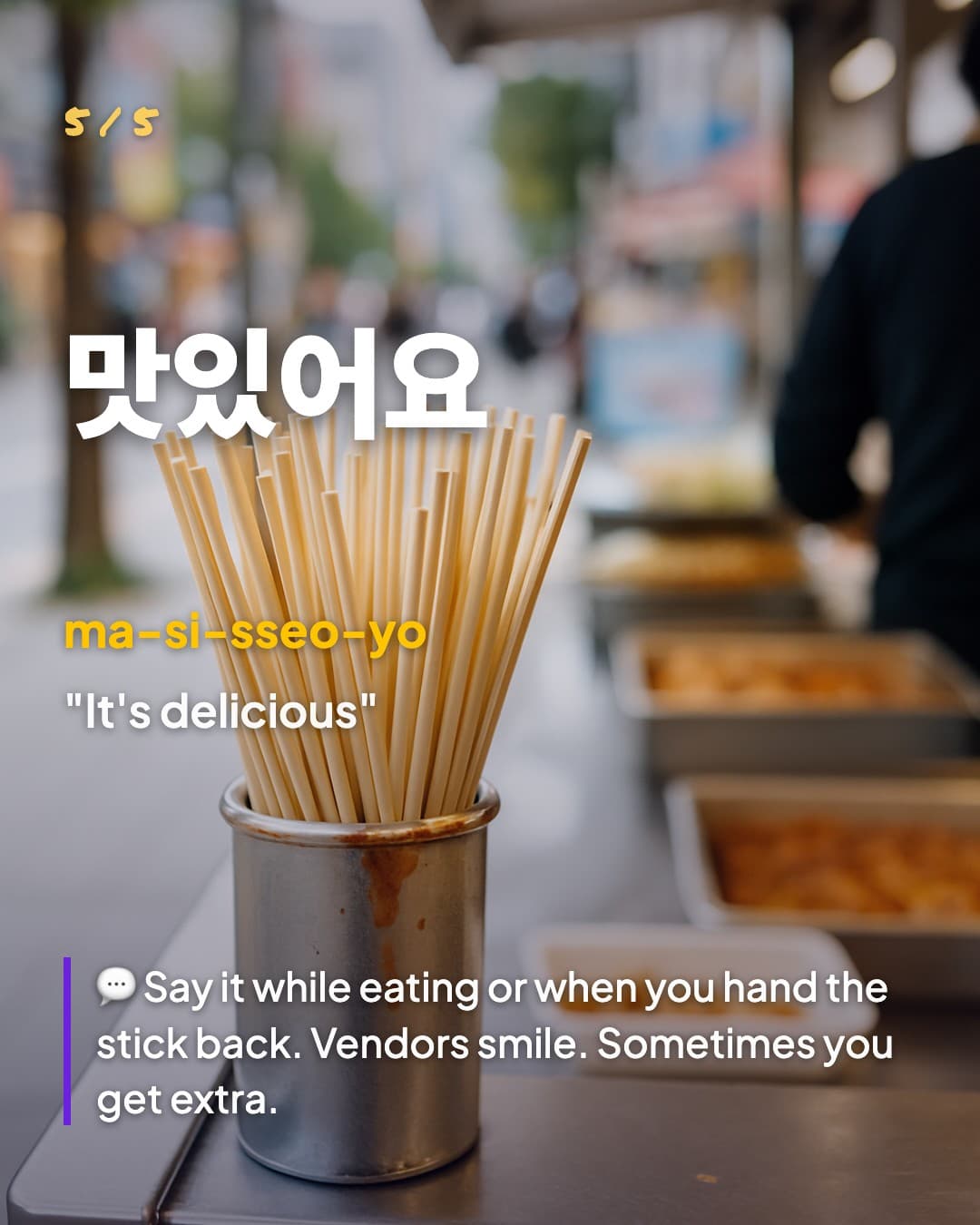
맛있어요 — It's delicious
ma-si-sseo-yo · Say it mid-bite or when you return a skewer to the vendor. Make eye contact and smile. Vendors genuinely light up, especially if you're a foreigner making the effort. Sometimes they'll toss in an extra piece or wave off small change. Even if they don't, you've made someone's day better.
How to sound right
- The yo at the end makes everything polite — never drop it with vendors or older Koreans.
- Double consonants like in maep-ji and ma-si-sseo are pronounced with a slight tension, almost like a tiny pause before the sound.
- If your pronunciation is rough, combining the phrase with a clear gesture — pointing, holding up fingers, or nodding at the food — always gets the message across.
FAQ
- Do street food vendors in Seoul speak English?
- Some do in areas like Myeongdong or Hongdae, but most rely on pointing and gestures. Knowing a couple of Korean phrases makes the whole exchange smoother and gets you better service.
- Should I pay cash or card at street carts?
- Cash is still king at older carts and markets like Gwangjang. Newer carts and trucks often take card or Kakao Pay. Carry small bills — 5,000 and 10,000 won notes — so vendors don't have to make change from a 50,000.
- Is it rude to walk away while eating street food?
- Not at all for handheld items like skewers or hotteok. But if they gave you a bowl or plate, they expect it back — that's why saying you'll eat there matters. Just return everything before you leave the area.

Ask Chrissy
Seoul

