Hope you never need these. But pack them anyway.
Look, I hope your trip goes perfectly. But phones die, you might get separated from your group, or someone might need real help. These 5 phrases cover the situations where gestures won't cut it. Koreans are incredibly helpful in emergencies. You just need to say the right thing to activate that instinct.
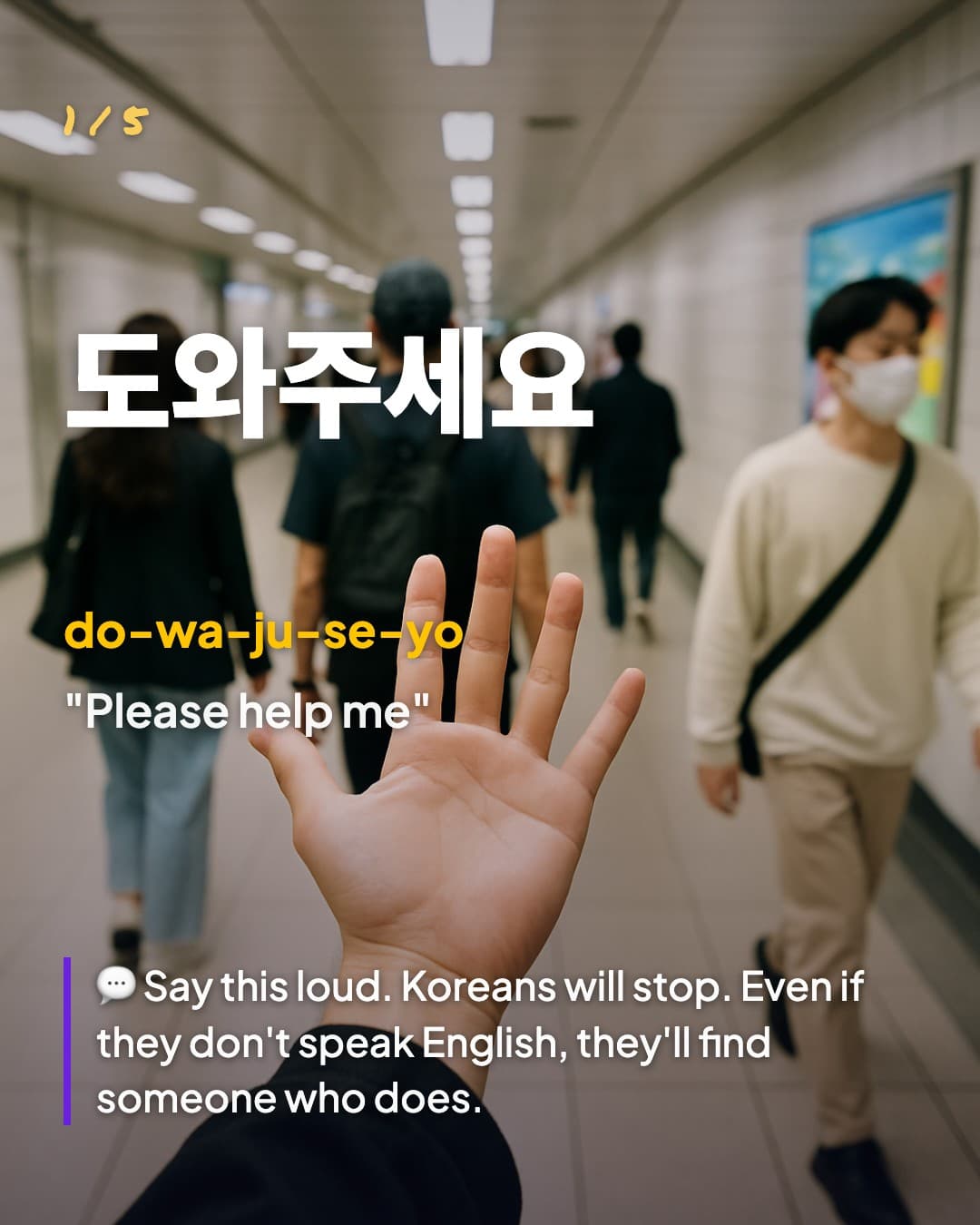
도와주세요 — Please help me
do-wa-ju-se-yo · This is your universal panic button. Shout it in a subway, on the street, in a restaurant. Koreans have a strong culture of helping strangers in distress. Even in busy Gangnam at rush hour, someone will stop. They might not speak English, but they'll immediately start problem-solving or grabbing someone who can translate.
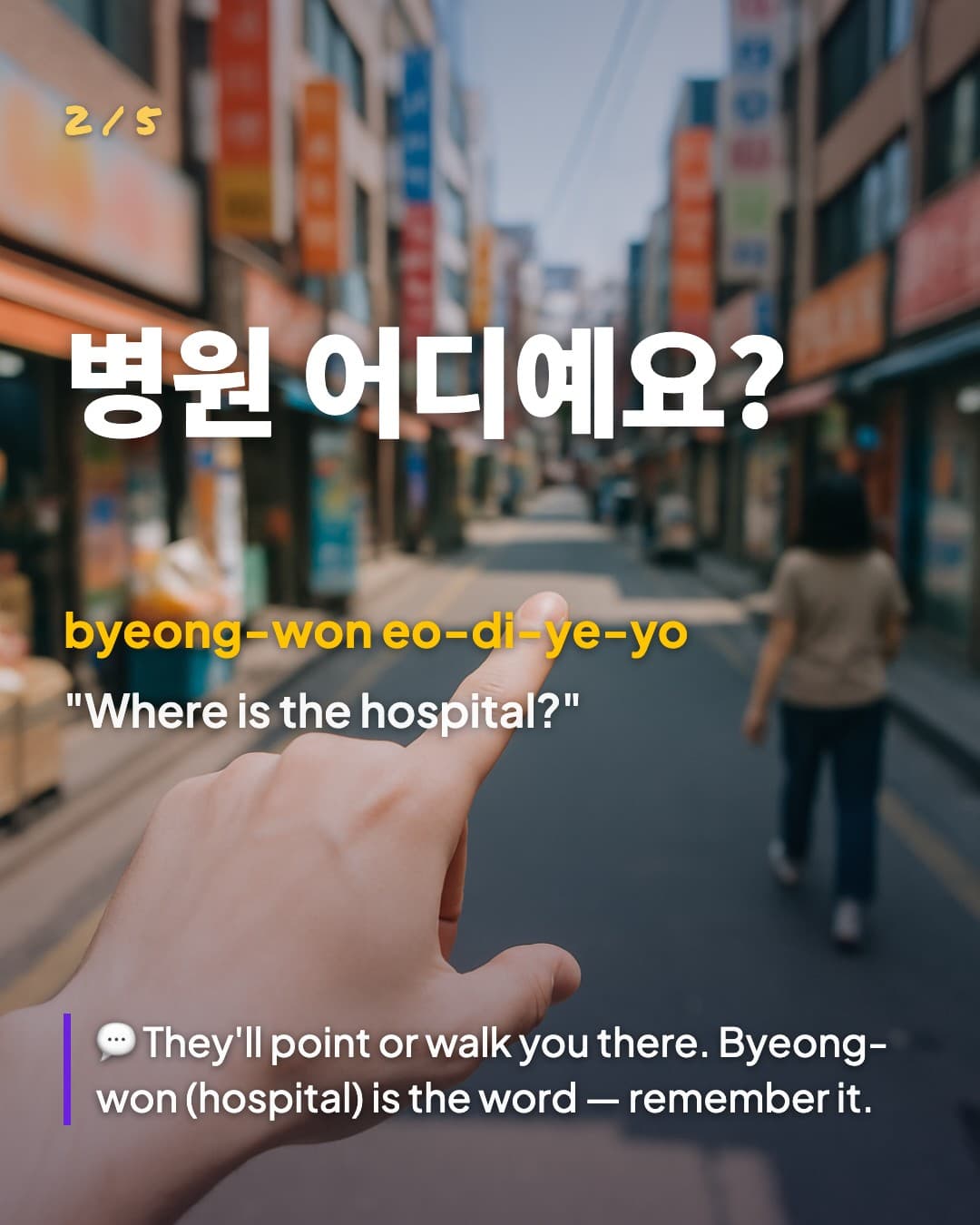
병원 어디예요? — Where is the hospital?
byeong-won eo-di-ye-yo · Memorize the word 병원 like your life depends on it, because someday it might. You can say this to anyone. A convenience store clerk, a taxi driver, someone on the street. Nine times out of ten, they'll either point clearly or physically walk you to the nearest clinic or hospital entrance.
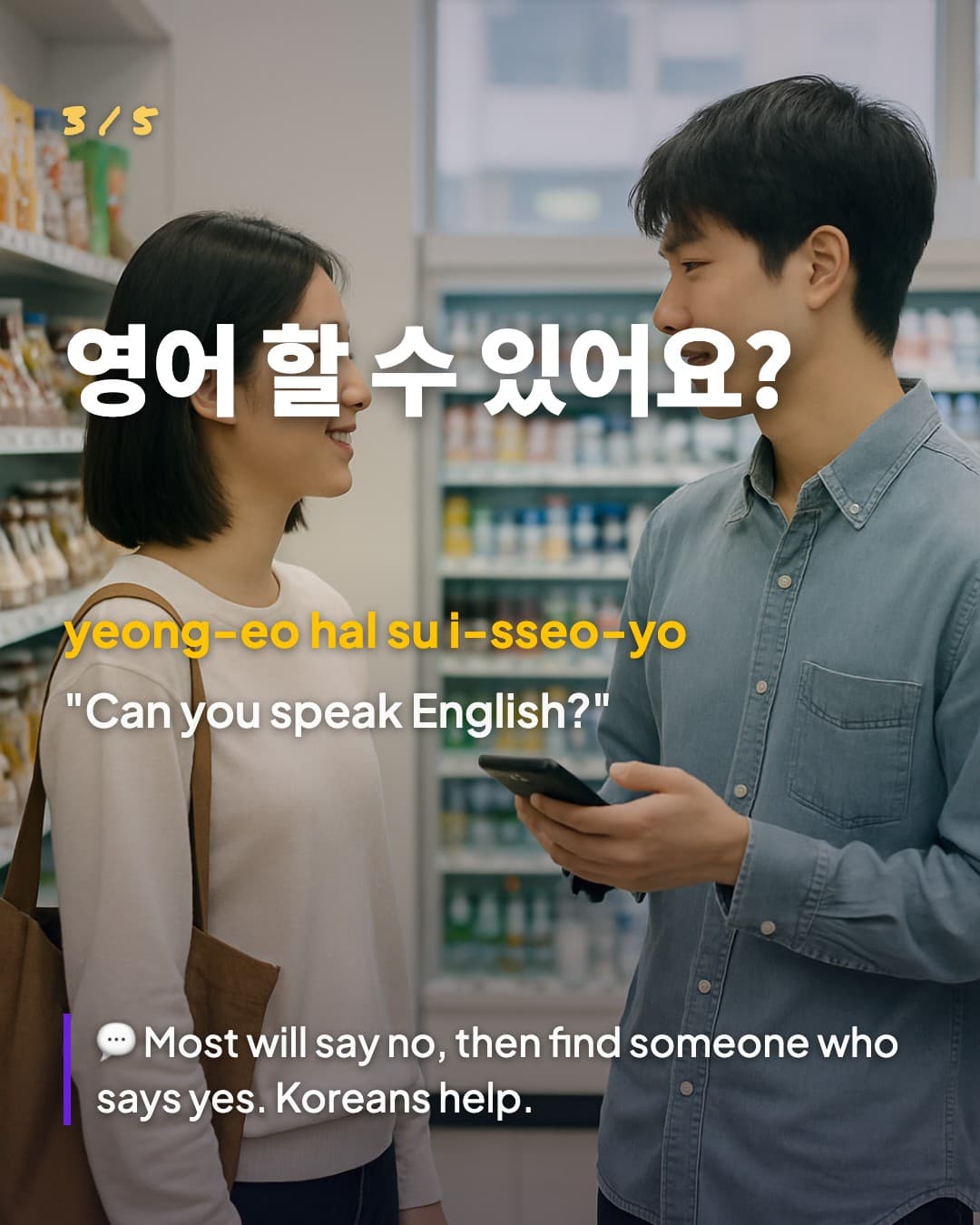
영어 할 수 있어요? — Can you speak English?
yeong-eo hal su i-sseo-yo · This buys you time to find the right helper. Ask the first person, and if they shake their head, they'll often look around and flag down a younger person or someone who looks like they might speak English. It's like a relay. Koreans will tag each other in until someone can communicate with you properly.
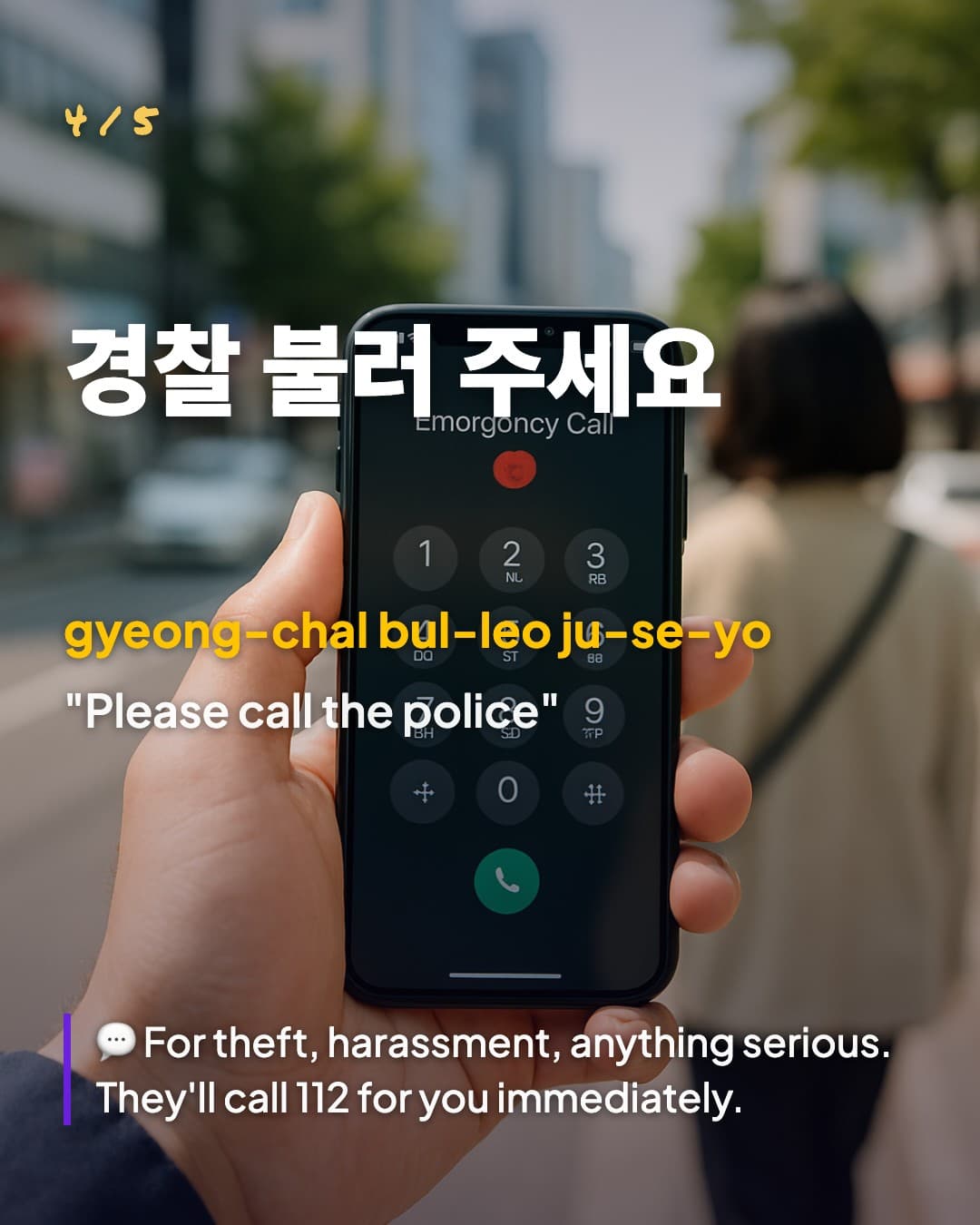
경찰 불러 주세요 — Please call the police
gyeong-chal bul-leo ju-se-yo · Use this for anything beyond minor inconvenience: stolen belongings, physical threats, serious accidents. The person you ask will dial 112 without hesitation. Police response in Seoul is fast, and they'll have English-speaking officers or translation services ready for foreigners.
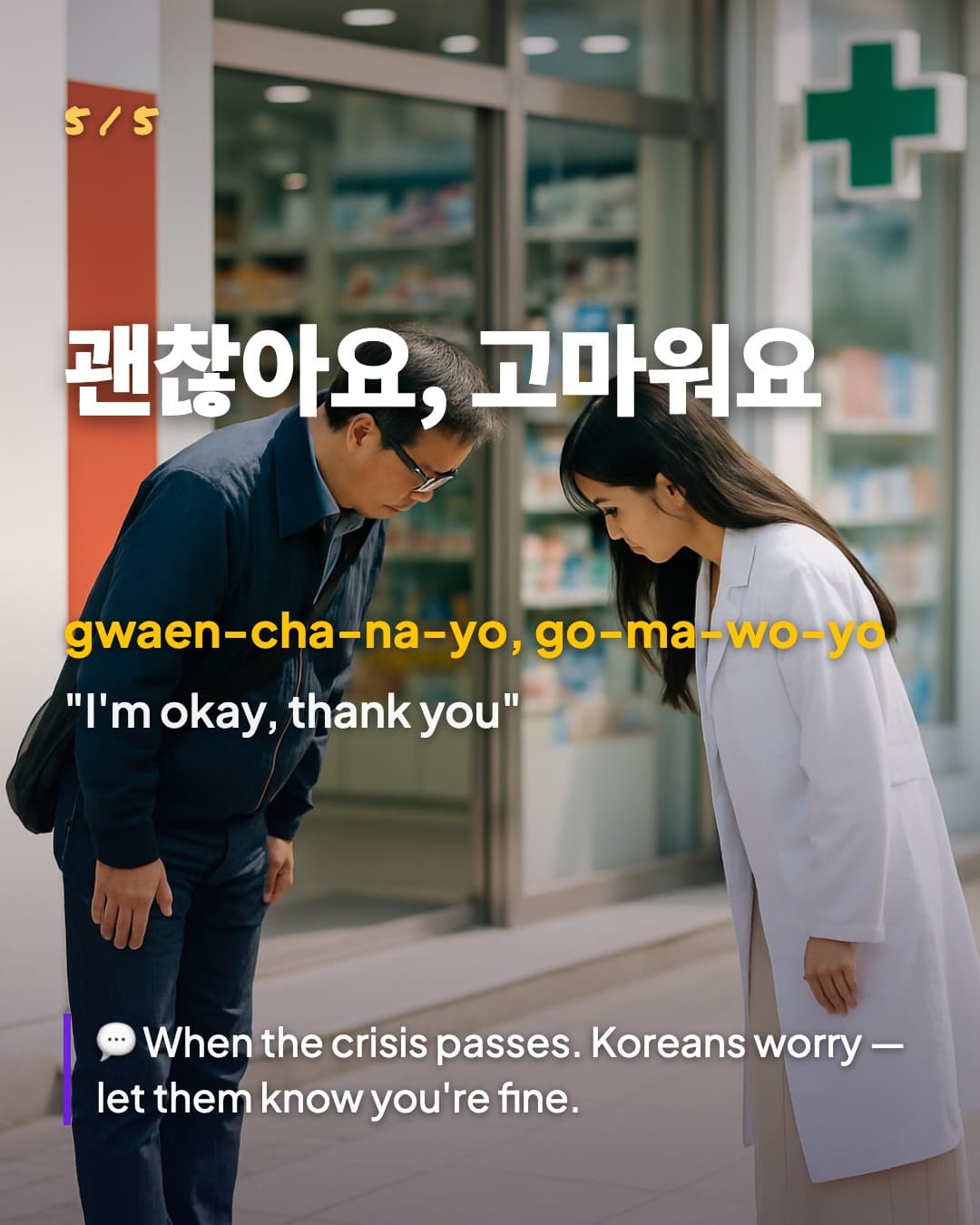
괜찮아요, 고마워요 — I'm okay, thank you
gwaen-cha-na-yo, go-ma-wo-yo · After someone helps you find the hospital or scares off a creep or calls the police, use this to close the loop. Koreans will genuinely worry about you even after the problem is solved. This phrase releases them from that responsibility and shows gratitude at the same time, which matters culturally.
How to sound right
- The 'eo' sound in Korean is like the 'u' in 'under' — your mouth should be relaxed, not stretched wide.
- All these phrases use polite formal speech, so you can say them to anyone regardless of age without being rude.
- When in real panic, even butchered pronunciation works — Koreans are excellent at understanding context and intent.
FAQ
- What if I need an ambulance instead of just directions to a hospital?
- Say 도와주세요 first to get attention, then dial 119 yourself or hand your phone to the helper and say '119' — that's the ambulance and fire number everyone knows. They'll take over the call.
- Do convenience store staff speak English for emergencies?
- Usually no, but every GS25, CU, and 7-Eleven has a phone and staff trained to call police or emergency services for customers. Just show urgency and say the key word: 병원 or 경찰.
- Should I bow when someone helps me in an emergency?
- A small bow with 고마워요 is perfect, but in actual emergencies people care more about your safety than etiquette. Save the proper thank-you for after you're okay.

Ask Jake
Seoul

