The only taxi Korean you need to survive Seoul
You just landed in Seoul, and the taxi line is moving fast. The driver looks at you through the mirror, waiting. You don't need to be fluent. You just need these five phrases. They cover every moment from setting your destination to stepping out with a receipt in hand.
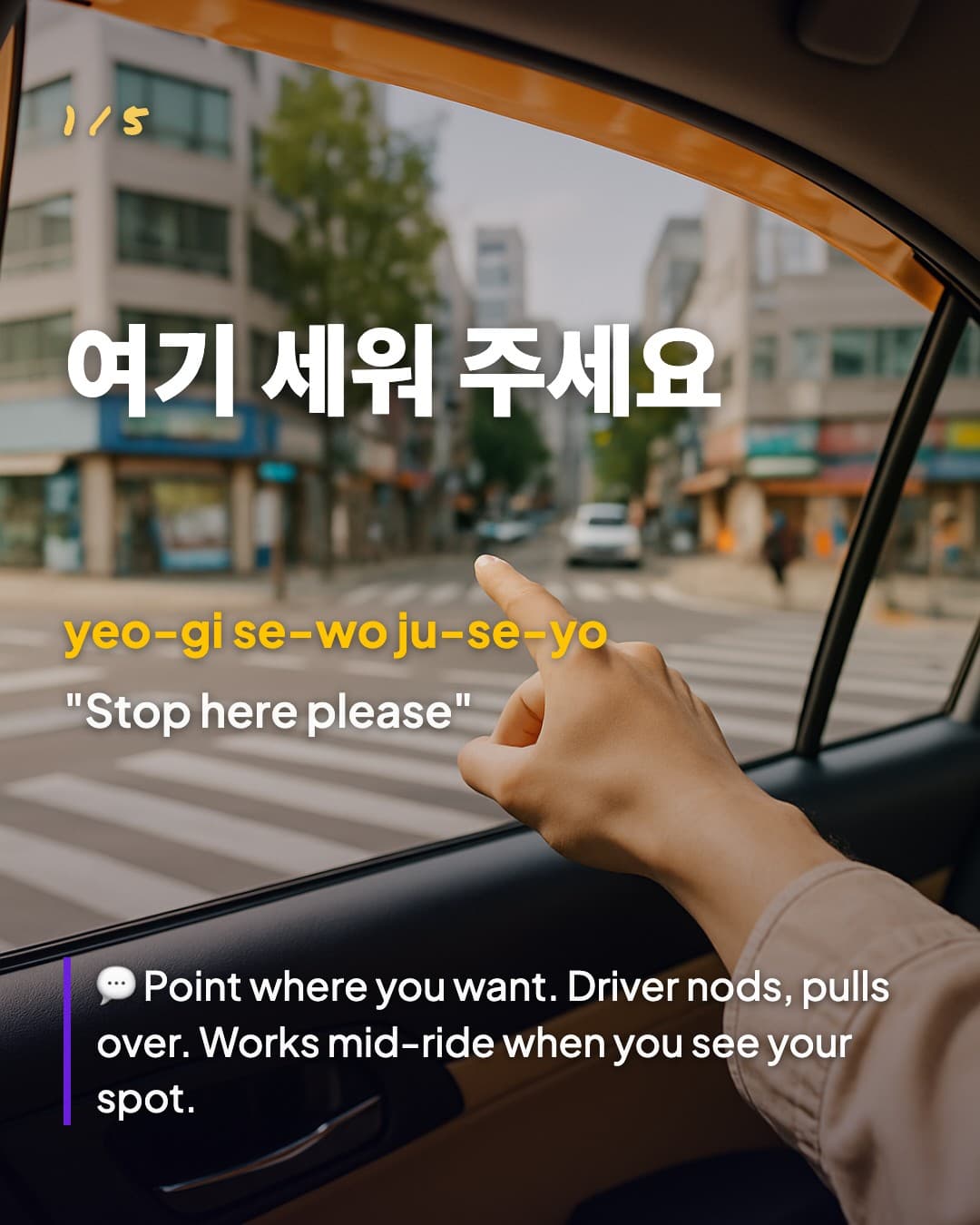
여기 세워 주세요 — Stop here please
yeo-gi se-wo ju-se-yo · Use this when you spot your hotel or a landmark you recognize mid-ride. Most drivers will glance at you in the mirror and give a small nod before smoothly pulling to the curb. It beats panicking and missing your stop by three blocks because you didn't know how to speak up.
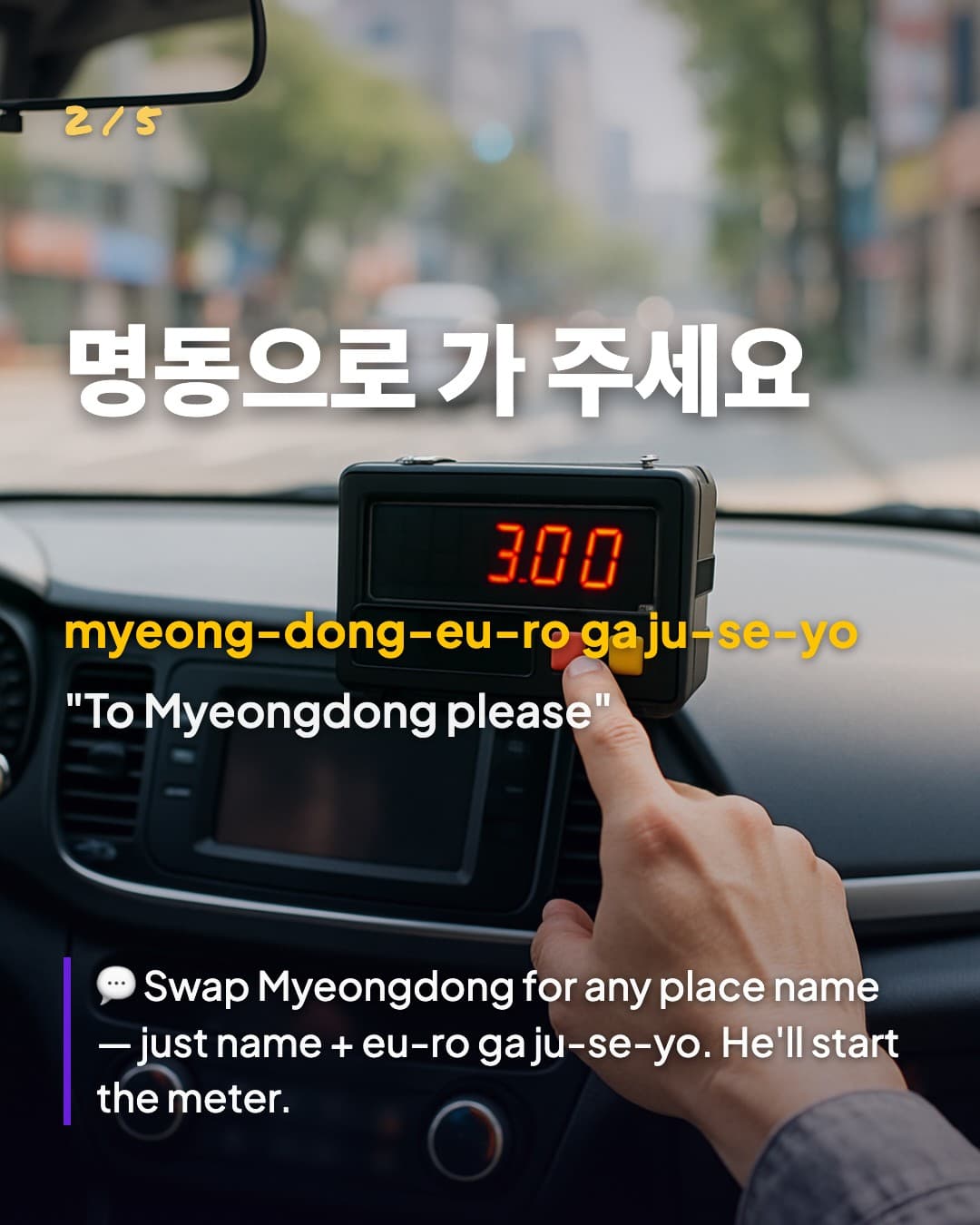
명동으로 가 주세요 — To Myeongdong please
myeong-dong-eu-ro ga ju-se-yo · Say this right after you close the door and the driver turns to you. Swap out Myeongdong for Hongdae, Gangnam, Itaewon, or your hotel name. The pattern stays the same. The meter clicks on, and you're moving without any awkward silence or guessing games.
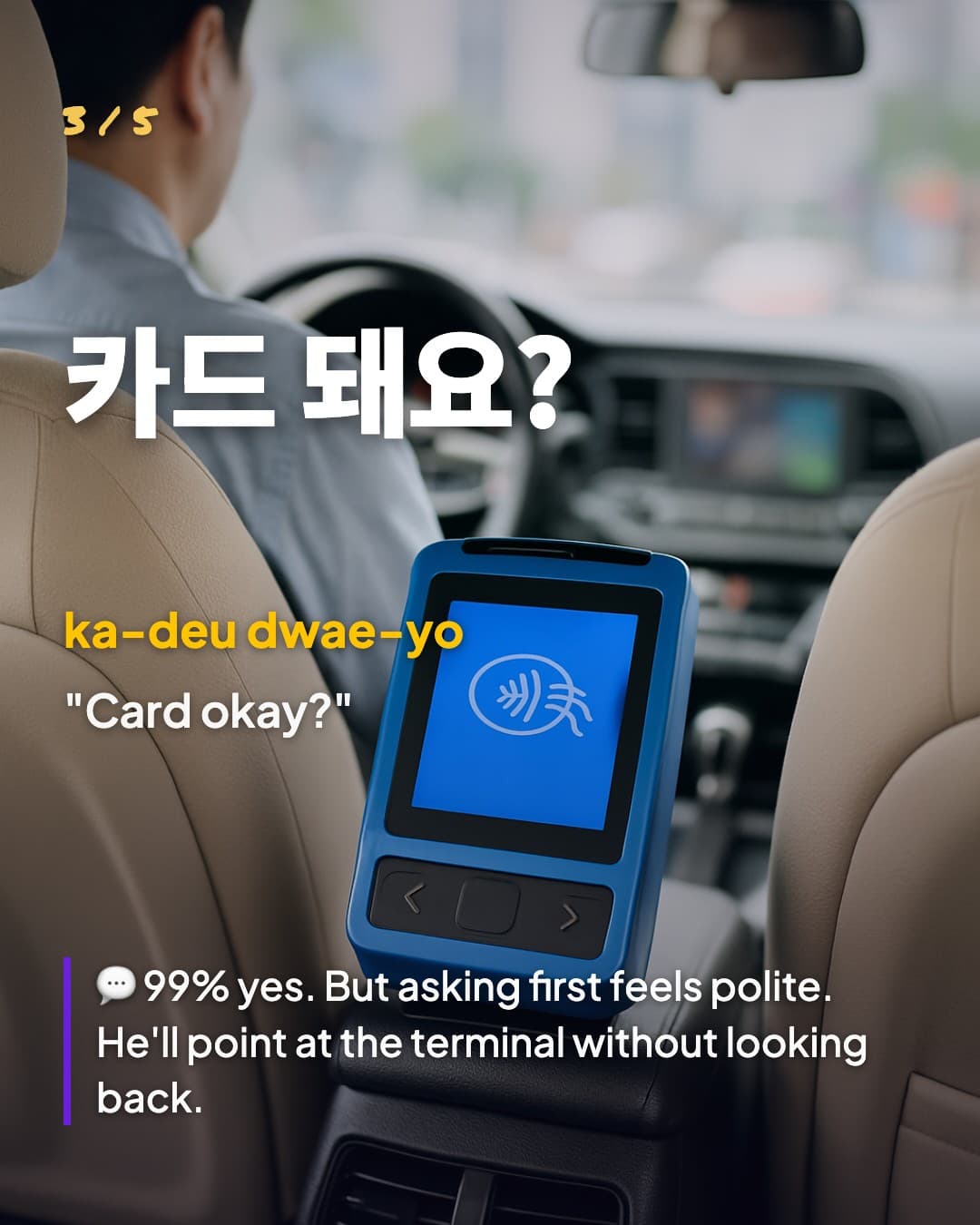
카드 돼요? — Card okay?
ka-deu dwae-yo · Ask this before you arrive, ideally when you're a minute away from your destination. The driver will usually just tap the card terminal or say yes without turning around. It saves that moment of scrambling for cash or realizing too late that you only have a 50,000 won bill.
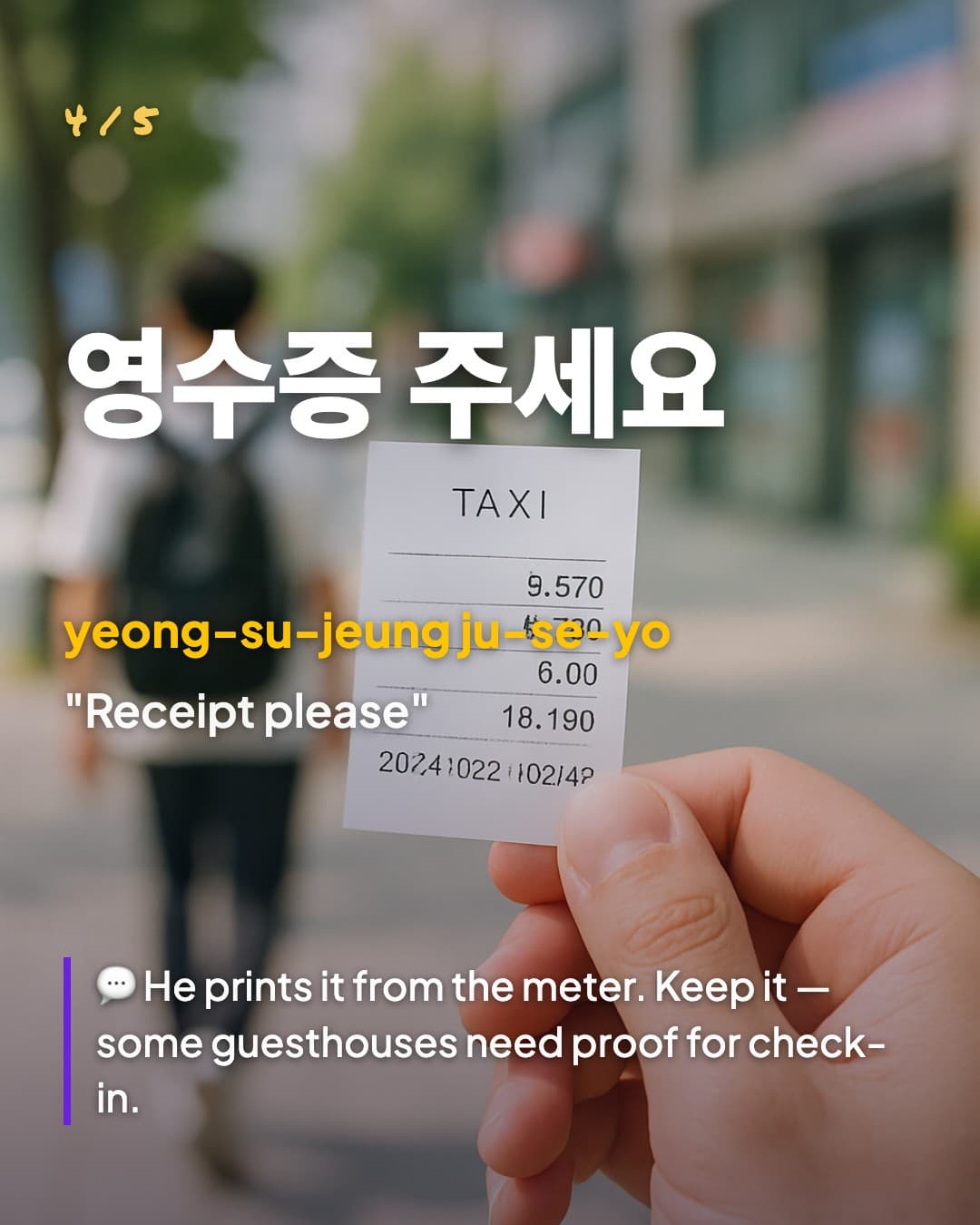
영수증 주세요 — Receipt please
yeong-su-jeung ju-se-yo · Say it right after you pay, before you open the door. The driver will press a button on the meter and a small slip prints out. Some guesthouses or Airbnb hosts ask for taxi receipts to confirm your arrival time, and it's also useful if you leave something behind and need to track the cab.
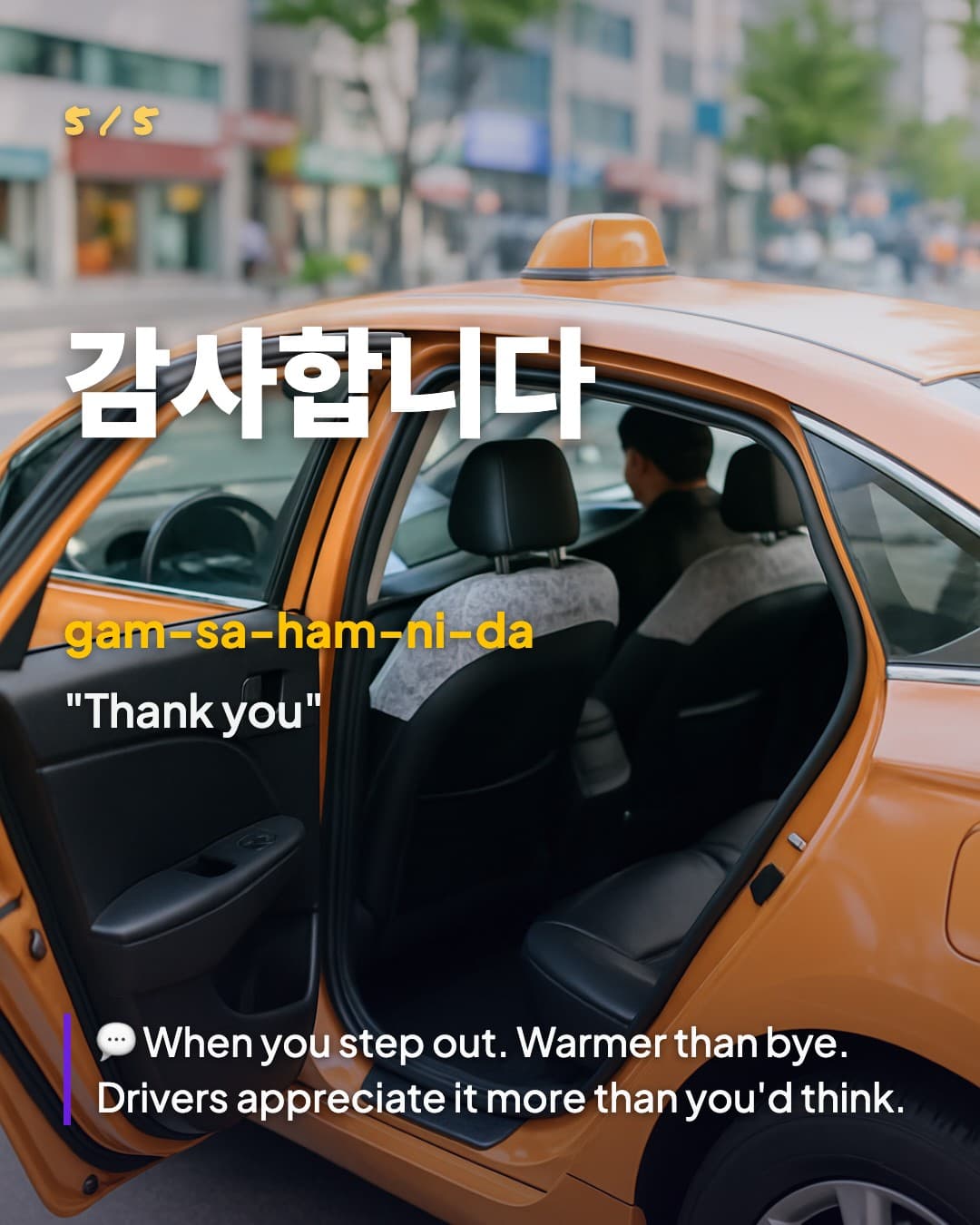
감사합니다 — Thank you
gam-sa-ham-ni-da · Drop this as you grab your bag and step out onto the curb. It's short, polite, and makes the interaction feel complete. Drivers hear it less often from tourists than you'd think, so it leaves a better impression than just shutting the door and walking away.
How to sound right
- The 'eo' sound in yeo-gi and myeong-dong is like the 'u' in 'up' — not 'ee-oh' as two syllables.
- Ju-se-yo ends most polite requests, so once you nail that combo, half these phrases become automatic.
- Don't stress about perfect pronunciation — drivers are used to accents and will understand you if you're close enough.
FAQ
- Do Seoul taxi drivers speak English?
- Most don't speak much English, which is why having these phrases ready makes such a difference. Pointing at a map or showing an address on your phone works too, but combining it with a Korean phrase gets you better cooperation.
- Should I tip taxi drivers in Korea?
- No, tipping isn't part of Korean taxi culture. The meter price is the final price, and drivers don't expect anything extra. Just pay what's shown and say thank you.
- What if the driver doesn't accept card?
- It's extremely rare, but if the terminal is broken, he'll usually tell you before starting the ride or drive you to an ATM. Keeping 10,000 won in cash as backup solves most problems.

Ask Moon
Seoul

