Say hello like a local, not a textbook.
You don't need 50 phrases to greet people in Korea. You need these 5. They cover everything from walking into a cafe to saying goodbye to someone you hope to see again. Learn them, use them, and watch how differently Koreans respond to you.
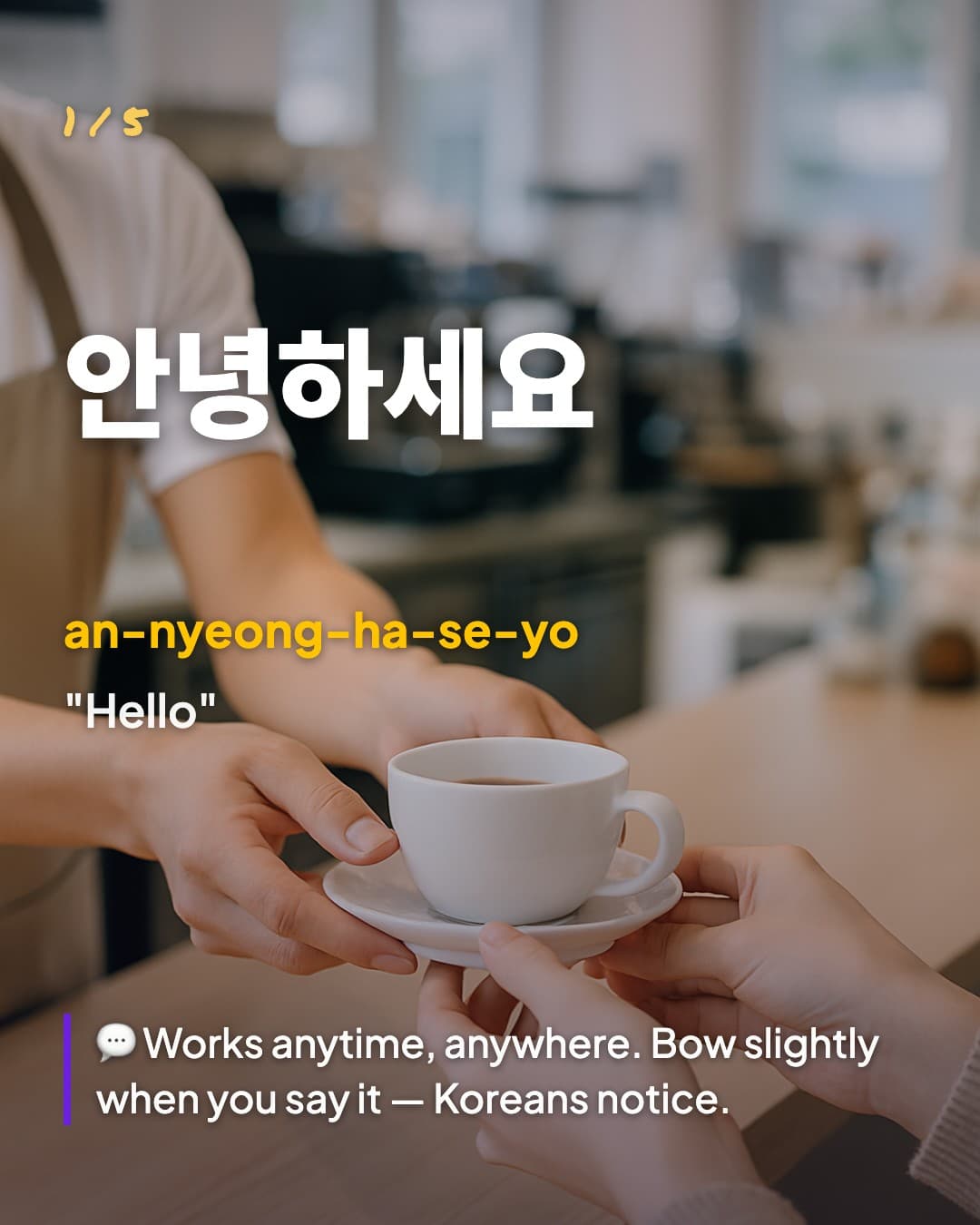

안녕하세요 — Hello
an-nyeong-ha-se-yo · This is your daily bread in Korea. Use it entering shops, greeting hotel staff, or meeting anyone for the first time. Pair it with a small nod or bow, and you've already made a better impression than most tourists. Even delivery drivers appreciate hearing it.
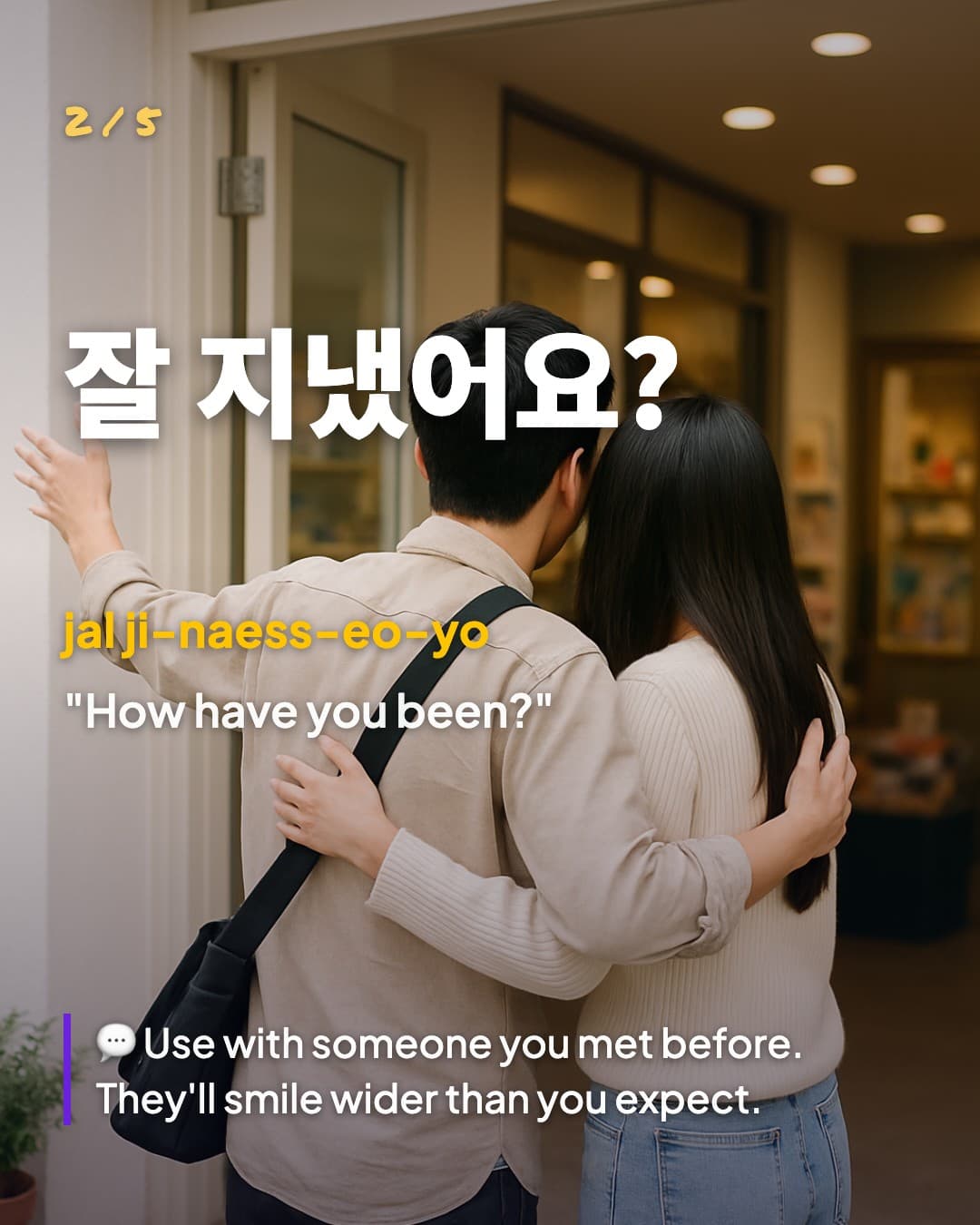
잘 지냈어요? — How have you been?
jal ji-naess-eo-yo · This one's for round two. If you met someone yesterday or last week, skip the basic hello and use this instead. It shows you remember them and care enough to ask. Cafe baristas and guesthouse owners especially love this little upgrade.
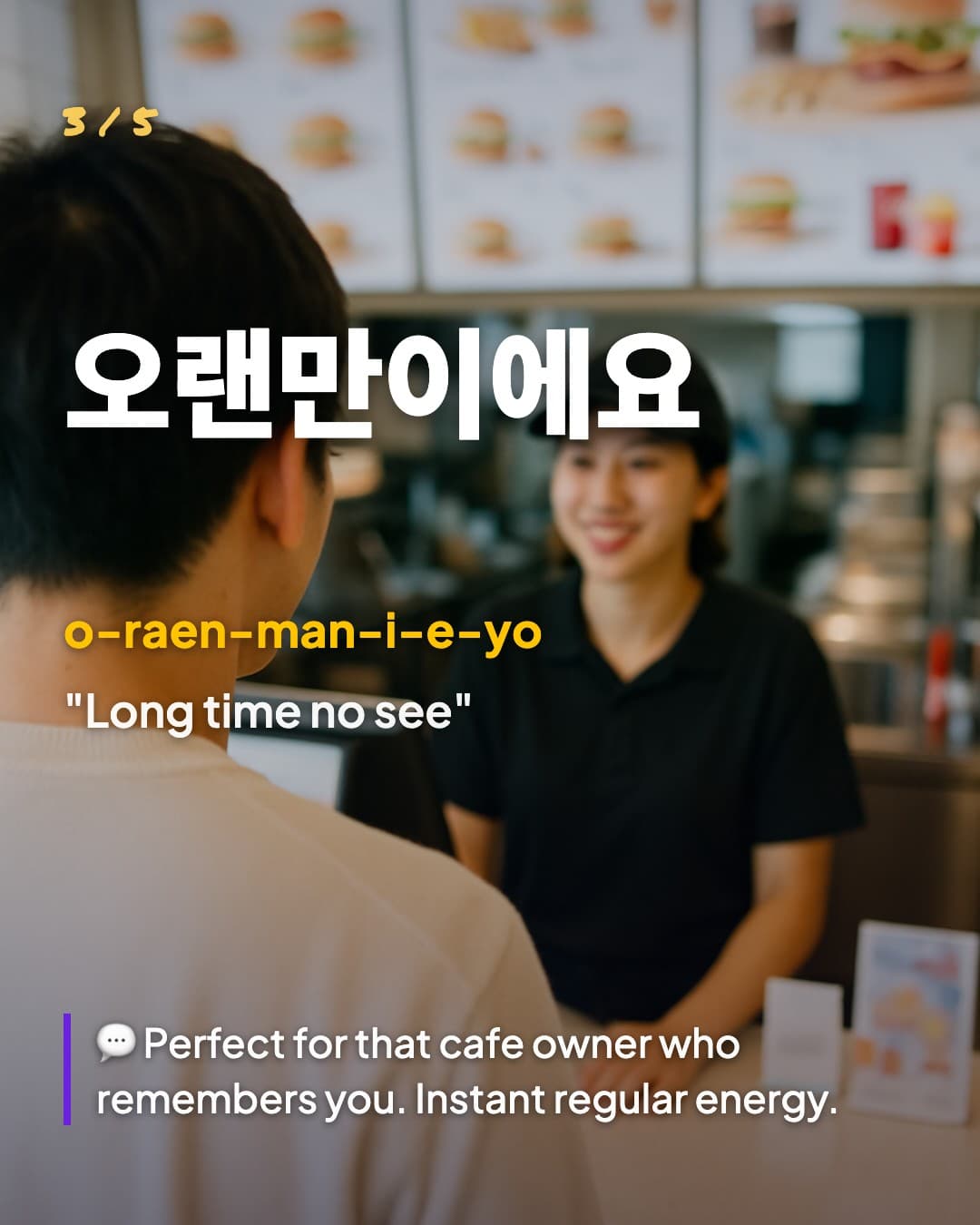
오랜만이에요 — Long time no see
o-raen-man-i-e-yo · Came back to that same restaurant after a few days? This phrase tells them you remembered them too. It bridges the gap between stranger and regular, and in Korea, being a regular means better service, occasional freebies, and real conversation. One phrase, instant warmth.
또 올게요 — I'll come again
tto ol-ge-yo · When you're leaving a restaurant or shop you genuinely enjoyed, say this instead of just goodbye. It signals you're not a one-time tourist. Staff will light up, sometimes even wave you off more enthusiastically. It's a small promise that Koreans really appreciate.
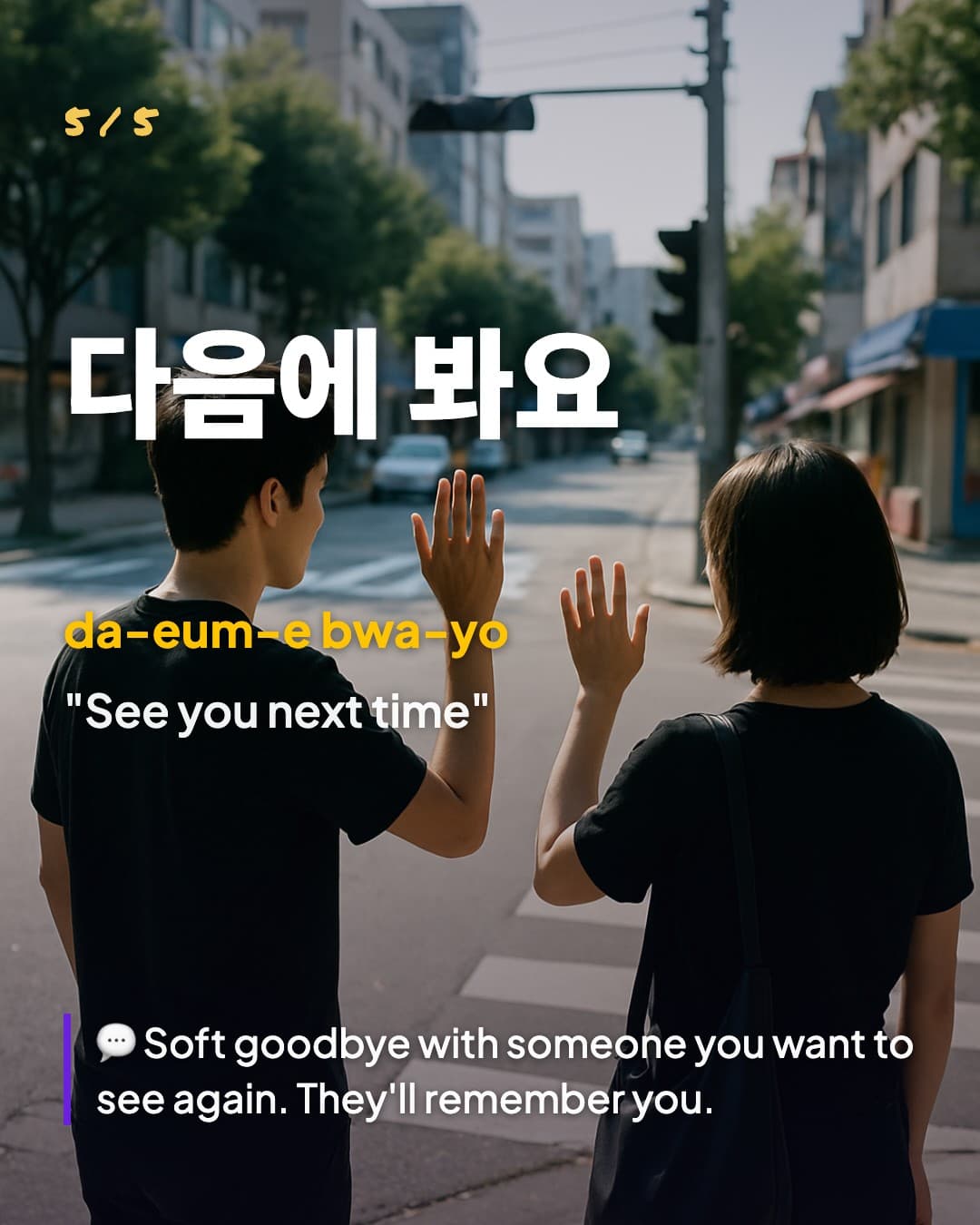
다음에 봐요 — See you next time
da-eum-e bwa-yo · Use this with someone you've connected with, even briefly. A friendly shopkeeper, a kind stranger who helped with directions, or a new acquaintance at a hostel. It's warmer than a final goodbye and leaves the door open without being pushy. People remember the ones who say this.
How to sound right
- The 'yo' ending makes it polite, so never drop it with strangers or anyone older.
- Koreans don't stress syllables hard, keep your rhythm even and smooth across the whole phrase.
- The 'eo' sound is like the 'u' in 'sun', not 'oh', practice it or you'll sound stiff.
FAQ
- What if I mess up the pronunciation?
- Koreans appreciate any attempt to speak their language. A smile and effort matter more than perfect accent. Most will help you or just be happy you tried.
- Can I use casual speech with young people I meet?
- Stick to polite speech until they switch to casual with you first. Age and context matter a lot in Korean, and polite forms keep you safe in 99% of situations.
- Do these work in formal business settings?
- The first phrase works everywhere. The others are better for casual travel situations like cafes, shops, and social meetings, not corporate offices or formal events.

Ask Jiny
Seoul
