この5つの一言があれば、通信がなくても韓国のどこへでも行けます
弘大駅を出たばかりでスマホの電池が切れてしまった。ブックマークしておいたカフェは、たぶん10ブロック以内のどこか。そんなときこそ、韓国語で道を尋ねる力が頼りになります。この5つのフレーズさえあれば十分です。現地の人は実際に足を止めて助けてくれますし、丁寧な言い方にもなっています。
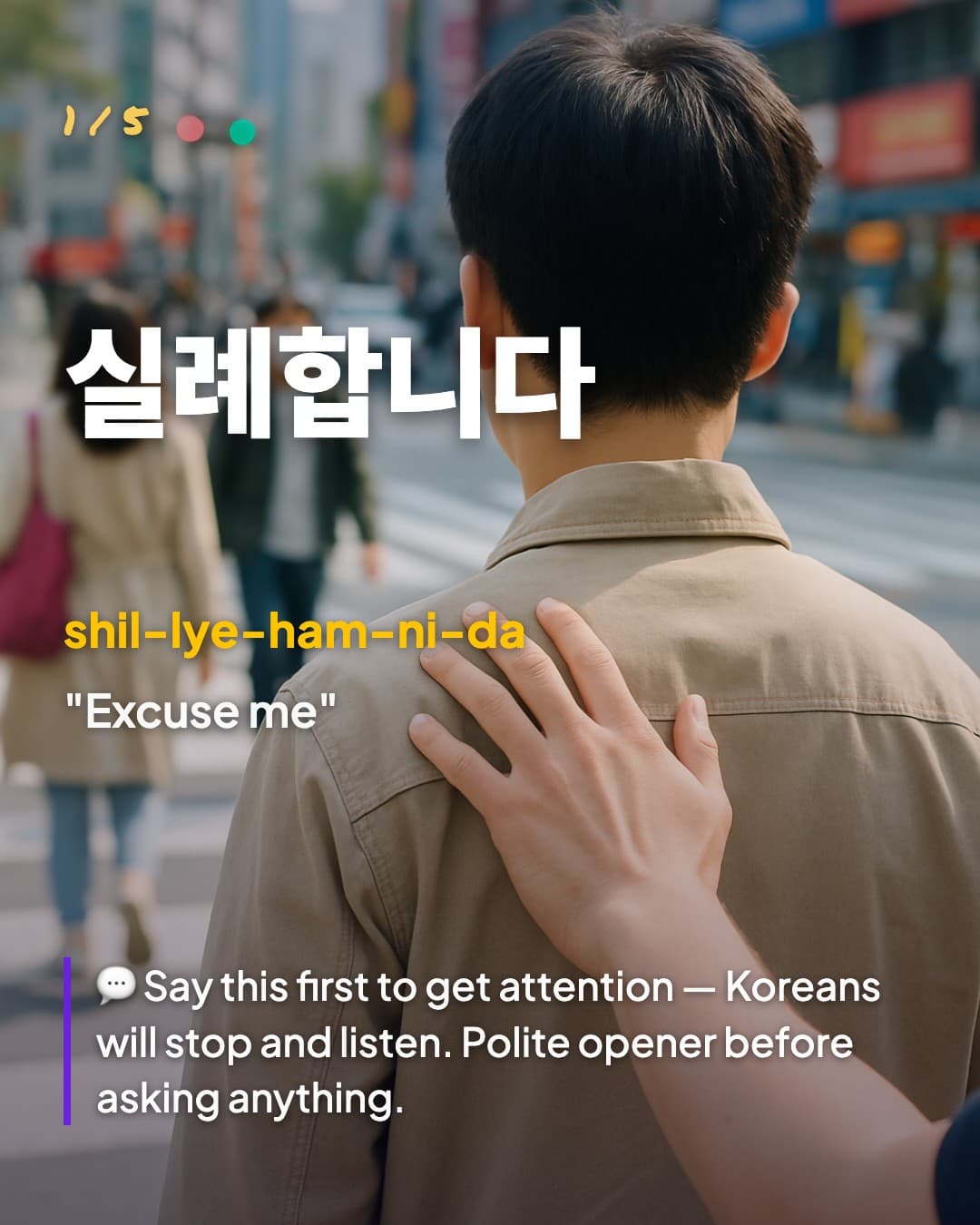
실례합니다 — Excuse me
shil-lye-ham-ni-da ・ 何かを尋ねる前に、スマホの画面を見せる前にもまず言っておく言葉です。相手への敬意が伝わり、足を止めて目を合わせてもらいやすくなります。これを言わずに話しかけると、チラシ配りだと思われてそのまま通り過ぎられてしまうこともあります。軽くお辞儀をしながら言えば、ほぼ確実に立ち止まってくれます。
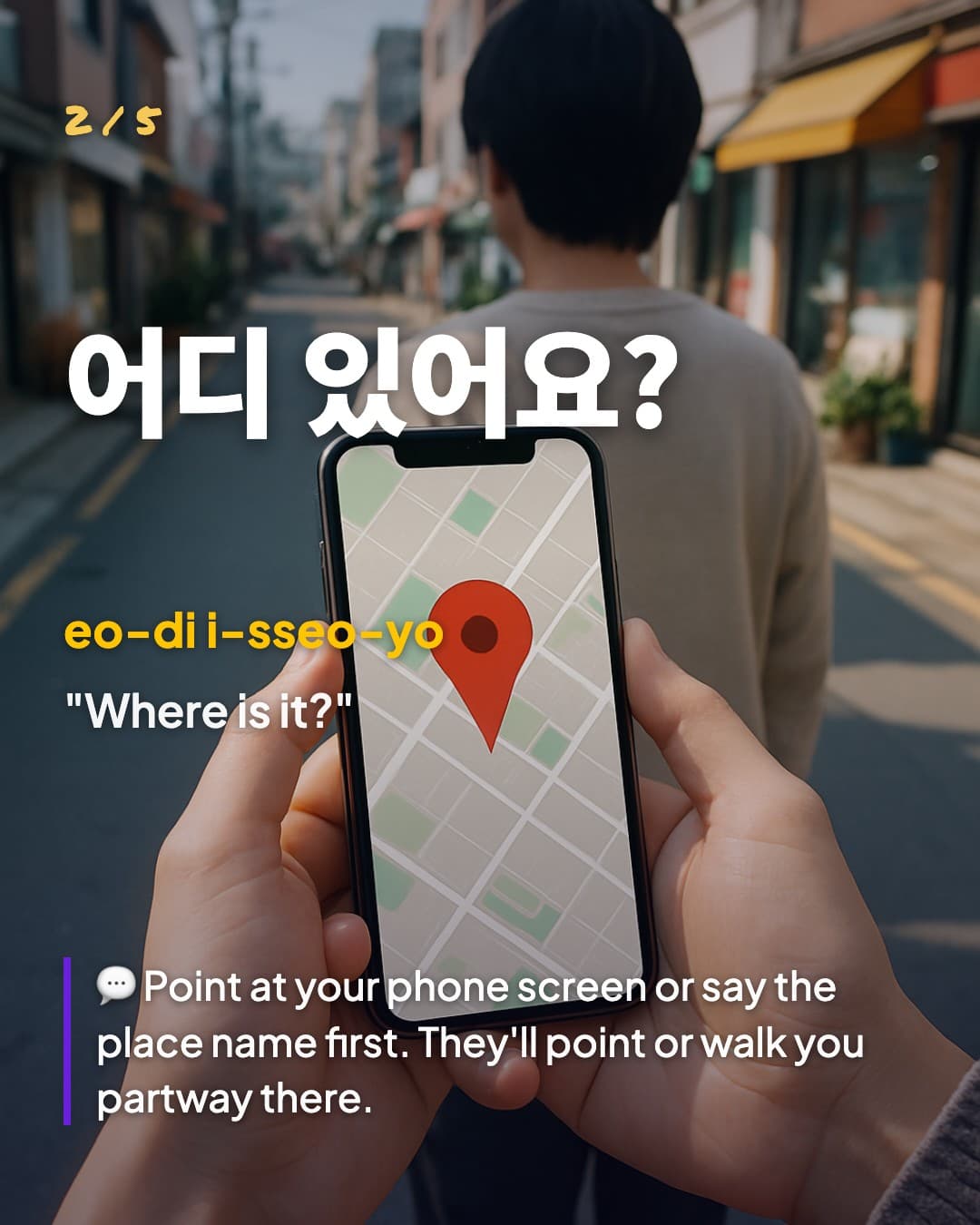
어디 있어요? — Where is it?
eo-di i-sseo-yo ・ 丁寧な挨拶のあとに場所の名前を言って、この一言を続けましょう。さらにいいのは、地図アプリや目的地の写真を開いて指しながら聞くことです。韓国の人は身振りで教えるのが得意で、道の先を指したり、必要な地下鉄の出口番号まで教えてくれたりします。早口で話し始めても、笑顔でうなずいていれば大丈夫。指し示すジェスチャーだけで十分伝わります。
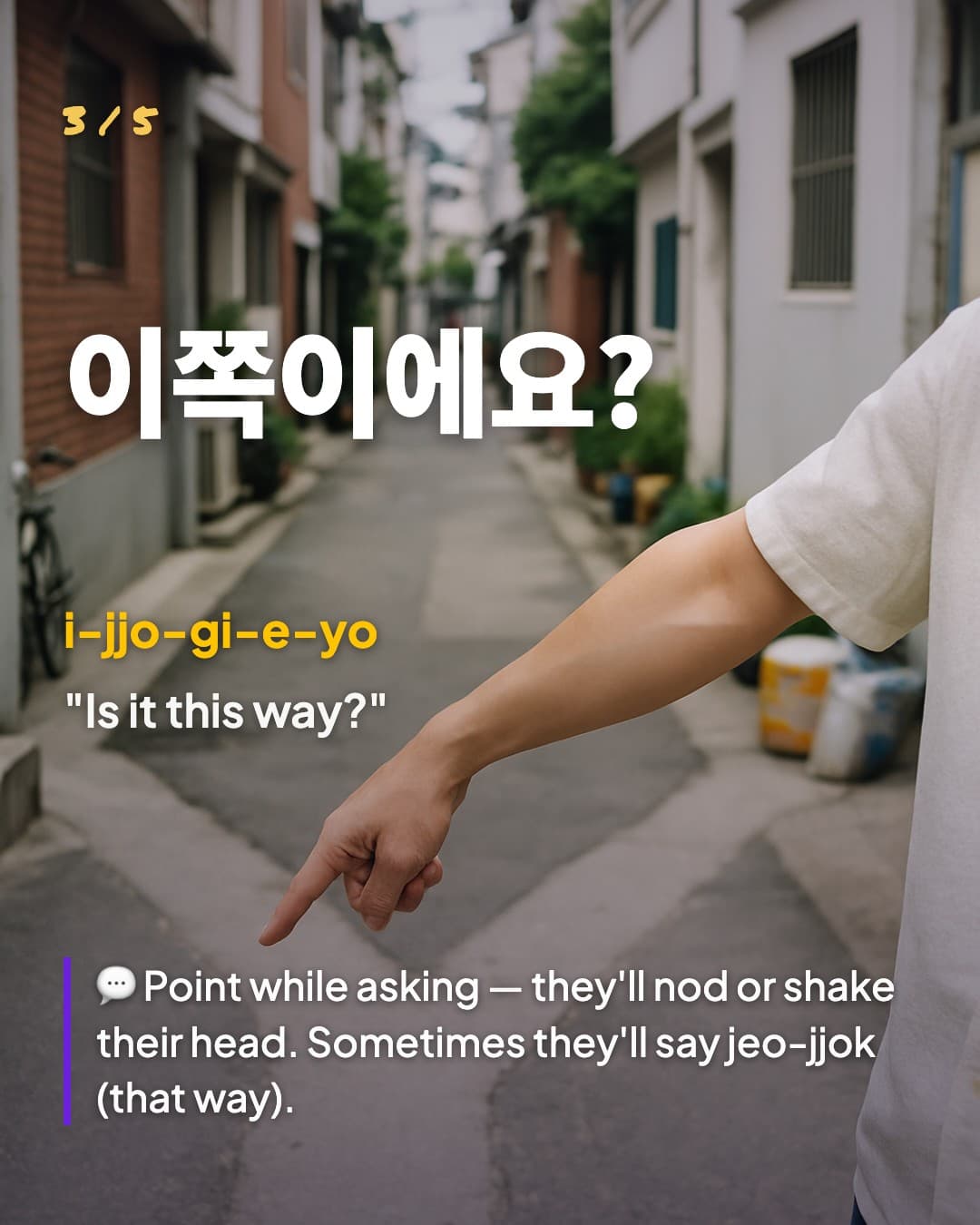
이쪽이에요? — Is it this way?
i-jjo-gi-e-yo ・ 説明は聞いたけれど、どの路地に入るべきかまだ確信が持てないときに使います。正しいと思う方向を指しながら聞いてみましょう。答えはうなずき、首振り、あるいは実際に腕の向きを正しい方向へ動かしてくれるといった反応が返ってきます。「저쪽(jeo-jjok)」と言って反対方向を指されたら、それは引き返すべきというサインです。
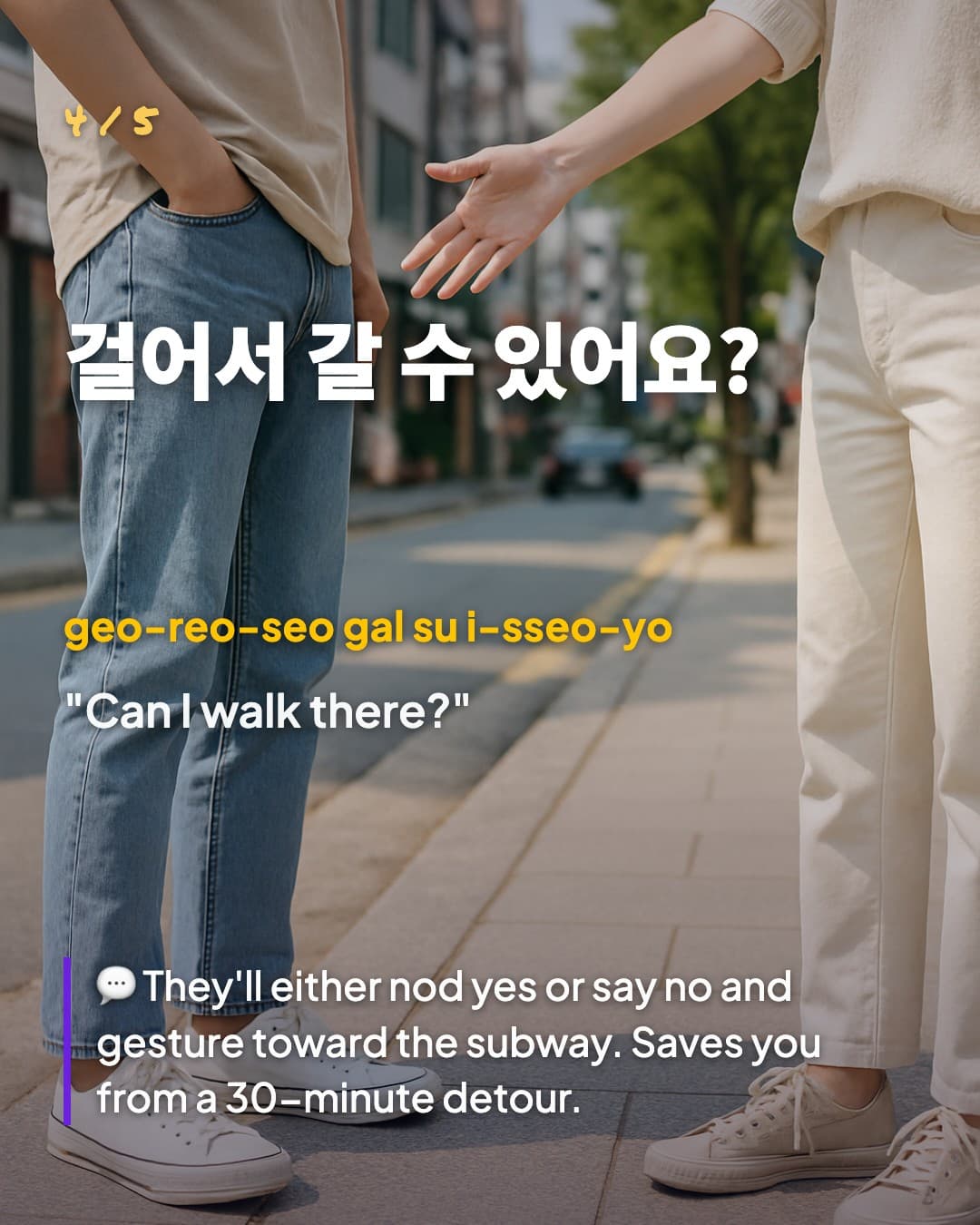
걸어서 갈 수 있어요? — Can I walk there?
geo-reo-seo gal su i-sseo-yo ・ すぐ近くに地下鉄があるのに、うっかり40分の徒歩コースに突っ込んでしまう失敗を防いでくれる一言です。首を振って下を指されたら、地下鉄に乗った方がいいという意味です。うなずいて指の数を示されたら、それが徒歩でかかる分数です。現地の人は徒歩時間についてかなり正直に教えてくれるので、首振りのサインは信じて大丈夫です。
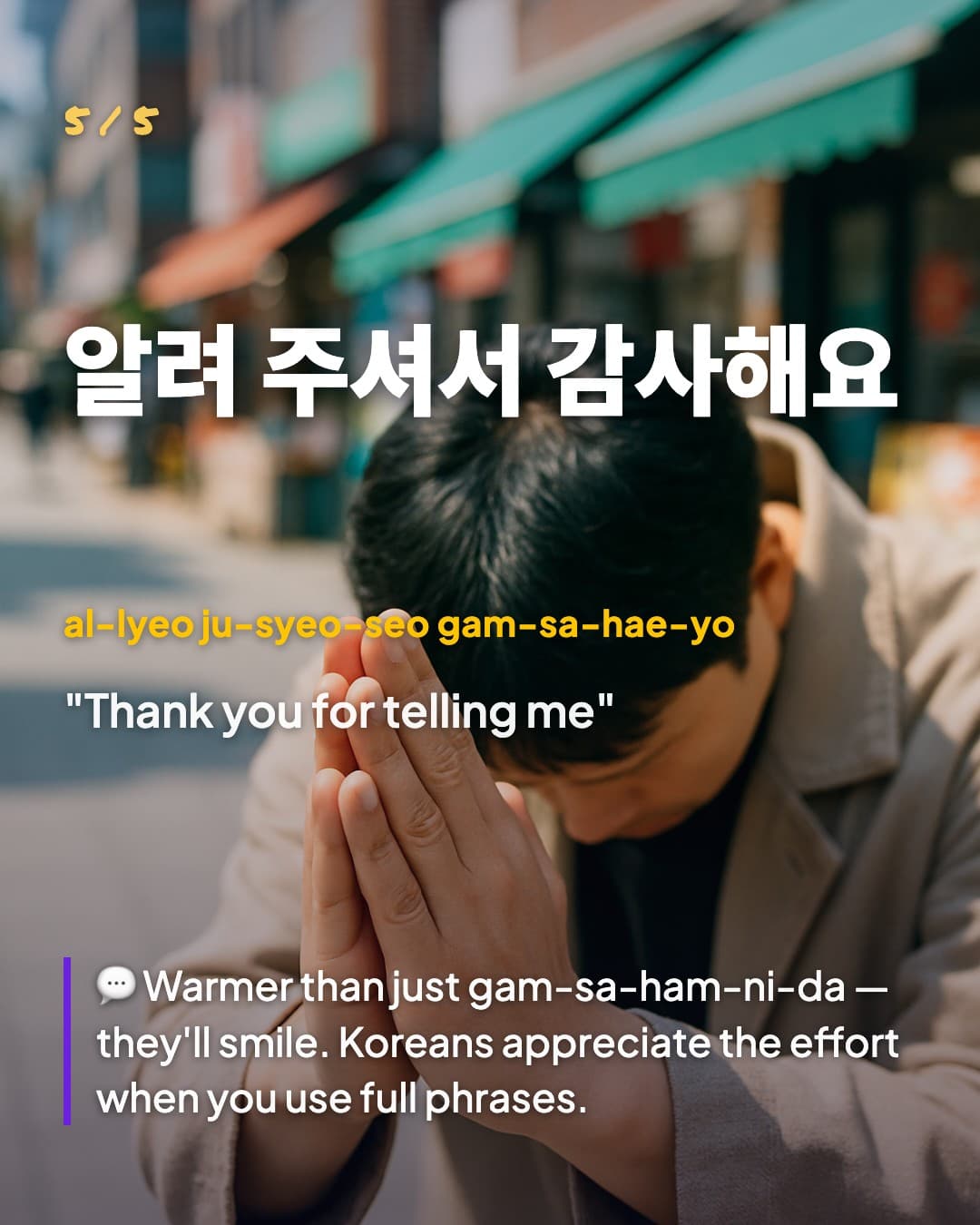
알려 주셔서 감사해요 — Thank you for telling me
al-lyeo ju-syeo-seo gam-sa-hae-yo ・ 笑顔を引き出す、温かいお別れの一言です。基本の「감사합니다(gam-sa-ham-ni-da)」よりも一歩進んで、具体的に助けてもらったことへの感謝を伝えられます。特に年配の方はこの言い方をとても喜んでくれて、肩をぽんと叩いたり、英語で励ましの言葉をかけてくれることもあります。いい印象を残せて、その人にとっても外国人旅行者への良い思い出になります。
自然に聞こえる発音のコツ
- eo-diの『eo』の音は、英語の『cup』の『u』のように、口を少し開けてリラックスして出します。
- shil-lye-ham-ni-daは4音節あります。急いで詰め込むように言うと、少し不機嫌に聞こえてしまうので気をつけましょう。
- 文末の最後の音節を少し上げて言うと、命令ではなく質問しているというニュアンスが伝わります。
よくある質問
- 韓国語の長い文章で答えられて、理解できないときはどうすればいいですか?
- 笑顔で相手の手を見てみましょう。韓国の人は道を教えるときによく身振りを使います。それでも迷ってしまったら、スマホの地図を見せて画面上を直接指してもらいましょう。ほとんどの人が拡大してぴったりの場所をタップして教えてくれます。
- 本当に困ったとき、コンビニのスタッフは英語が話せますか?
- ソウルや釜山では、大学街や観光地の近くにあるGS25やCUのスタッフの多くが基本的な英語を話せます。ただ、このフレーズを覚えておけば、英語が通じにくい小さな街の中でもどこでも通用します。
- ヘッドホンをしている人に声をかけるのは失礼ですか?
- 少しそう感じられることがあります。ヘッドホンをしていない人、お店の前に座っている年配の方、カフェの中のスタッフなどを探しましょう。時間と余裕を持って助けてくれる可能性が高いです。

Solarに聞いてみる
ソウル

