The only subway Korean you need to sound like you know what you're doing
Seoul's subway is incredible—until you're standing on the platform unsure if you're heading north or south. You don't need fluent Korean, just these 5 phrases that solve the actual problems travelers face: confirming your transfer, checking your direction, and politely shoving your way out at your stop. Locals are used to helping lost-looking foreigners, so even your imperfect pronunciation will get you exactly where you need to go.
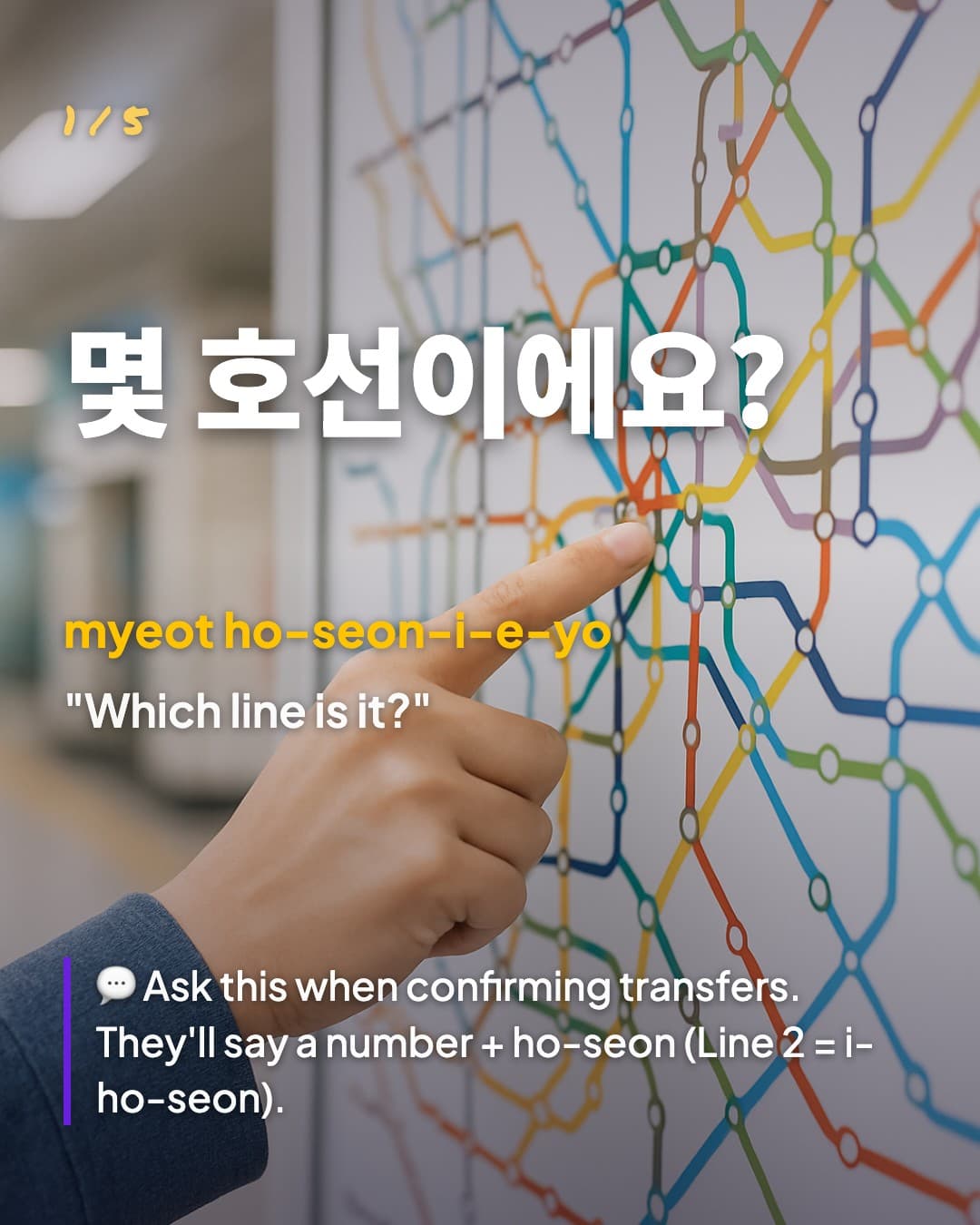
몇 호선이에요? — Which line is it?
myeot ho-seon-i-e-yo · Use this when you're double-checking a transfer at a big station like Gangnam or Seoul Station. The answer will always be a number plus ho-seon—so if they say sam-ho-seon, that's Line 3. You'll hear this constantly on platform signs, so your ears will catch it fast.
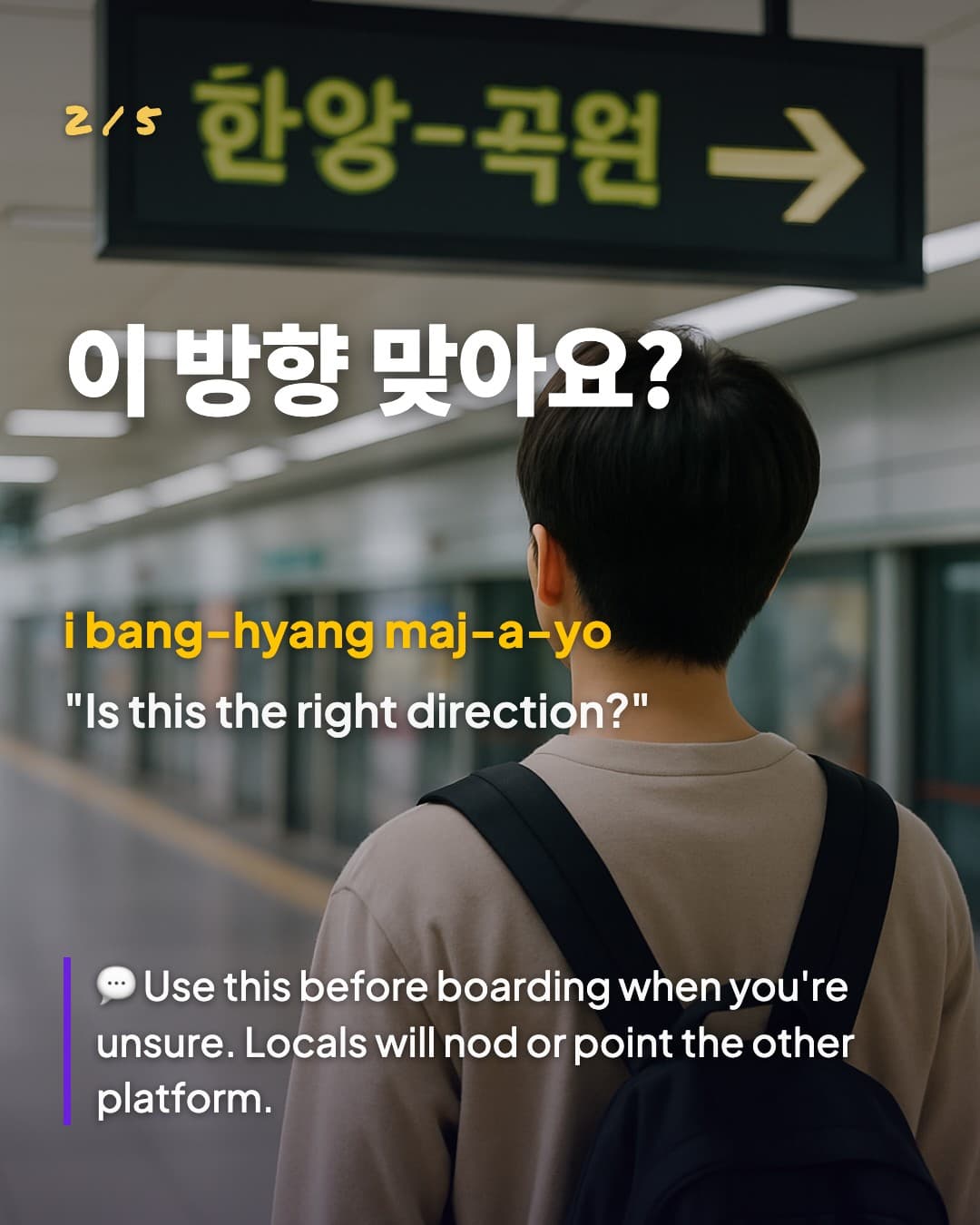
이 방향 맞아요? — Is this the right direction?
i bang-hyang maj-a-yo · Perfect for that moment when you're standing between two platforms and the signs aren't helping. Point vaguely in the direction you think is right, say this, and wait. A quick nod means yes, a head shake and a point means go to the other side. Saves you from riding three stops the wrong way.
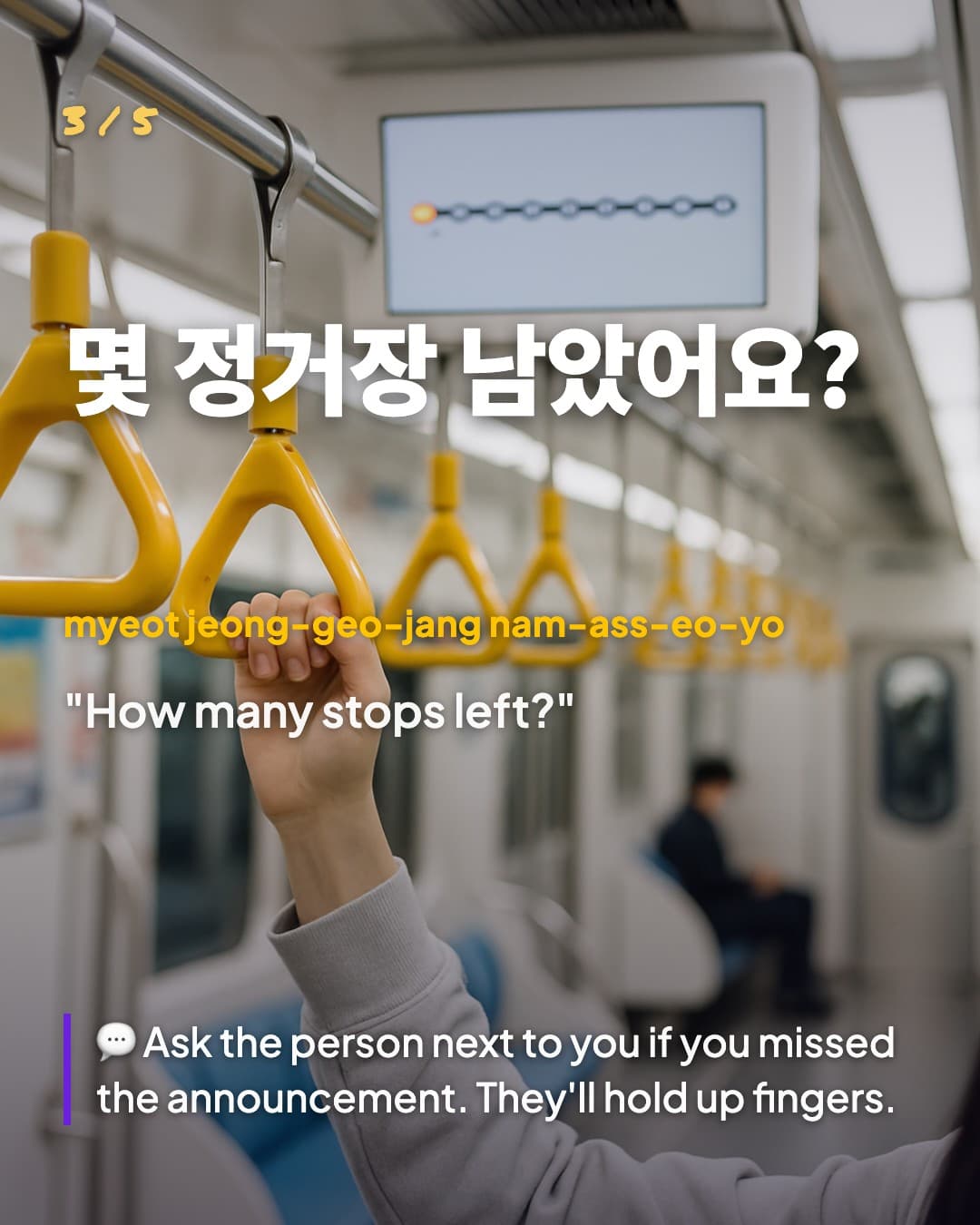
몇 정거장 남았어요? — How many stops left?
myeot jeong-geo-jang nam-ass-eo-yo · Ask the ajumma or student sitting next to you when you're nervous about missing your stop. They'll either hold up fingers or say the number in English. This works especially well when announcements are garbled or you dozed off.
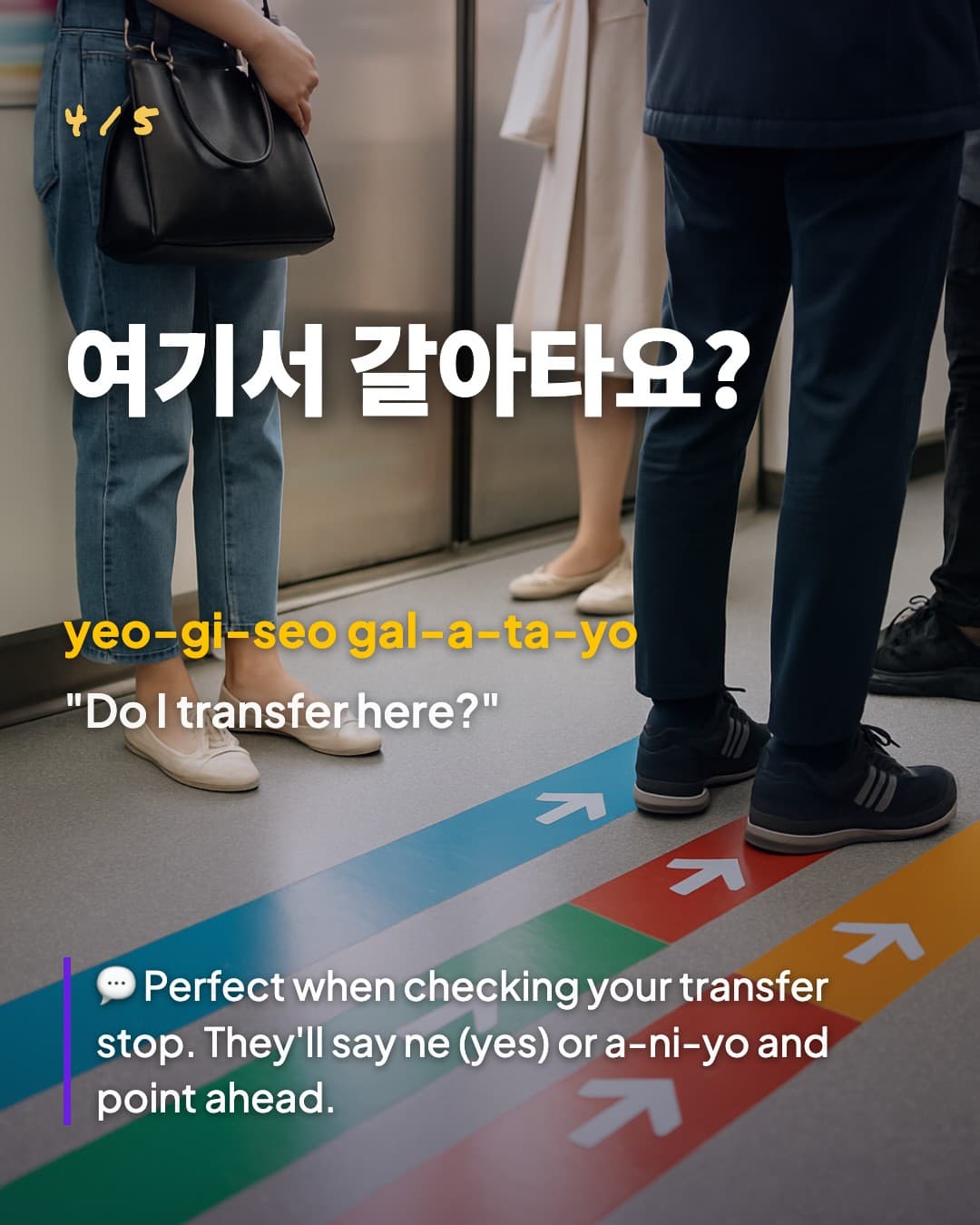
여기서 갈아타요? — Do I transfer here?
yeo-gi-seo gal-a-ta-yo · Deploy this when your subway app says transfer but you want a human to confirm you're at the right station. Koreans are very precise about directions, so if it's the next stop, they'll say a-ni-yo and gesture forward. It prevents that panic of getting off too early.
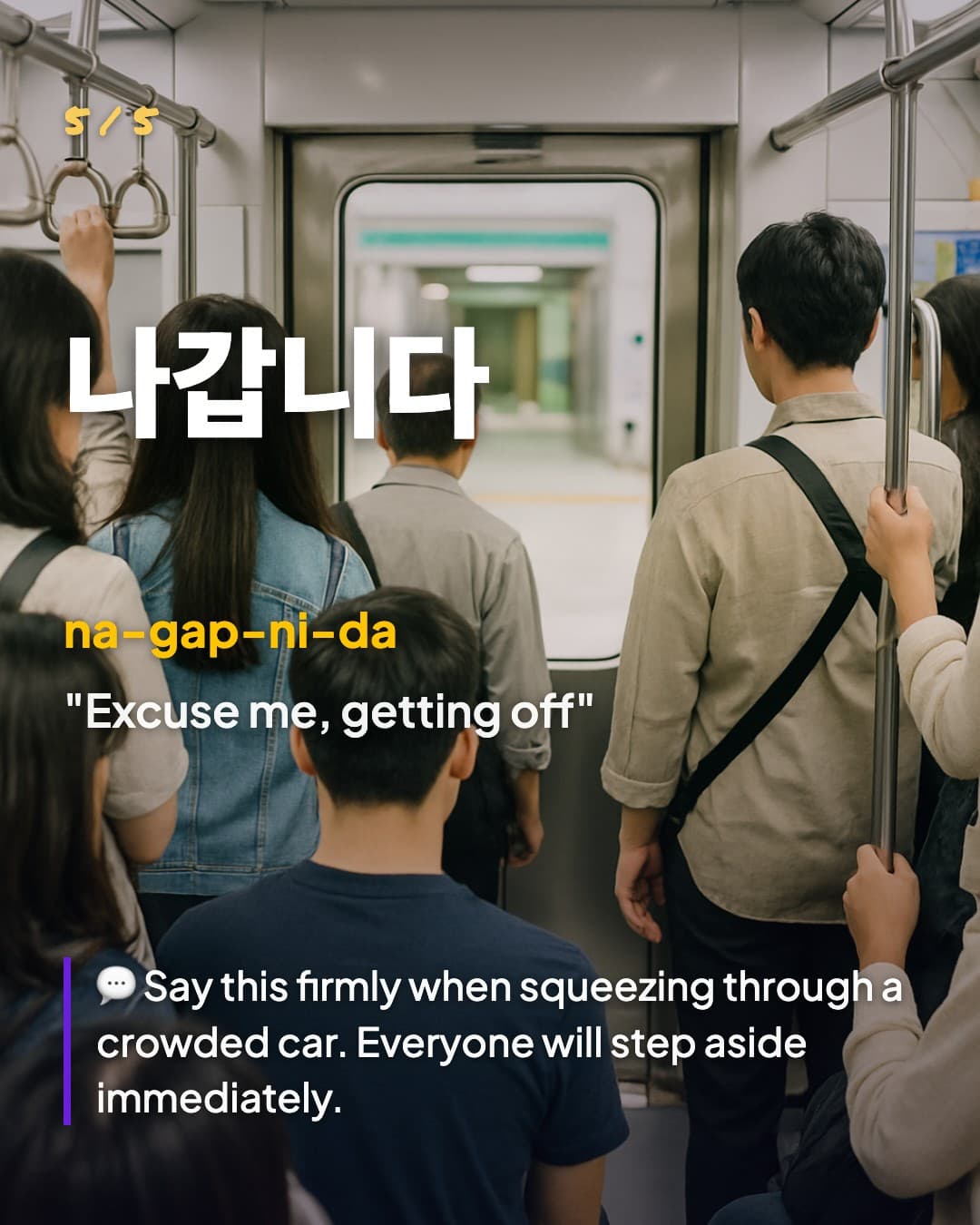
나갑니다 — Excuse me, getting off
na-gap-ni-da · Your magic words during rush hour when you're three people deep and your stop is next. Say it with confidence—not loud, just clear—and watch the sea part. Koreans respect the getting-off priority, so don't be shy. Hesitate and you'll miss your stop.
How to sound right
- The -yo ending makes everything polite, so even if your pronunciation is rough, you won't sound rude.
- Myeot sounds like 'myo' plus a tiny 't' at the end—don't stress it, Koreans will understand from context.
- Na-gap-ni-da is slightly more formal than -yo phrases, which is why it works so well as an excuse-me—it shows respect while you're literally pushing past someone.
FAQ
- Do subway staff speak English at major stations?
- Information desks at big hubs like Hongdae and Myeongdong usually have English speakers, but regular station staff and riders vary. That's why these phrases are clutch—you're not depending on finding someone fluent.
- Can I just use a subway app instead of asking?
- Apps are great for planning, but they don't tell you which physical platform or if there's temporary construction rerouting. Real-time confirmation from a human beats staring confused at your phone.
- Is it rude to bother people with questions on the subway?
- Koreans expect travelers to ask for help and generally respond kindly, especially if you attempt Korean first. Just avoid asking someone wearing headphones or clearly asleep.

Ask James
Seoul

