The only pharmacy Korean you need to memorize
Korean pharmacies are easy to find, usually marked with a green cross. The staff are helpful but often work faster than they speak English. These five phrases cover most of what travelers actually need: asking for common medicine, understanding how to take it, and getting instructions you can read later.
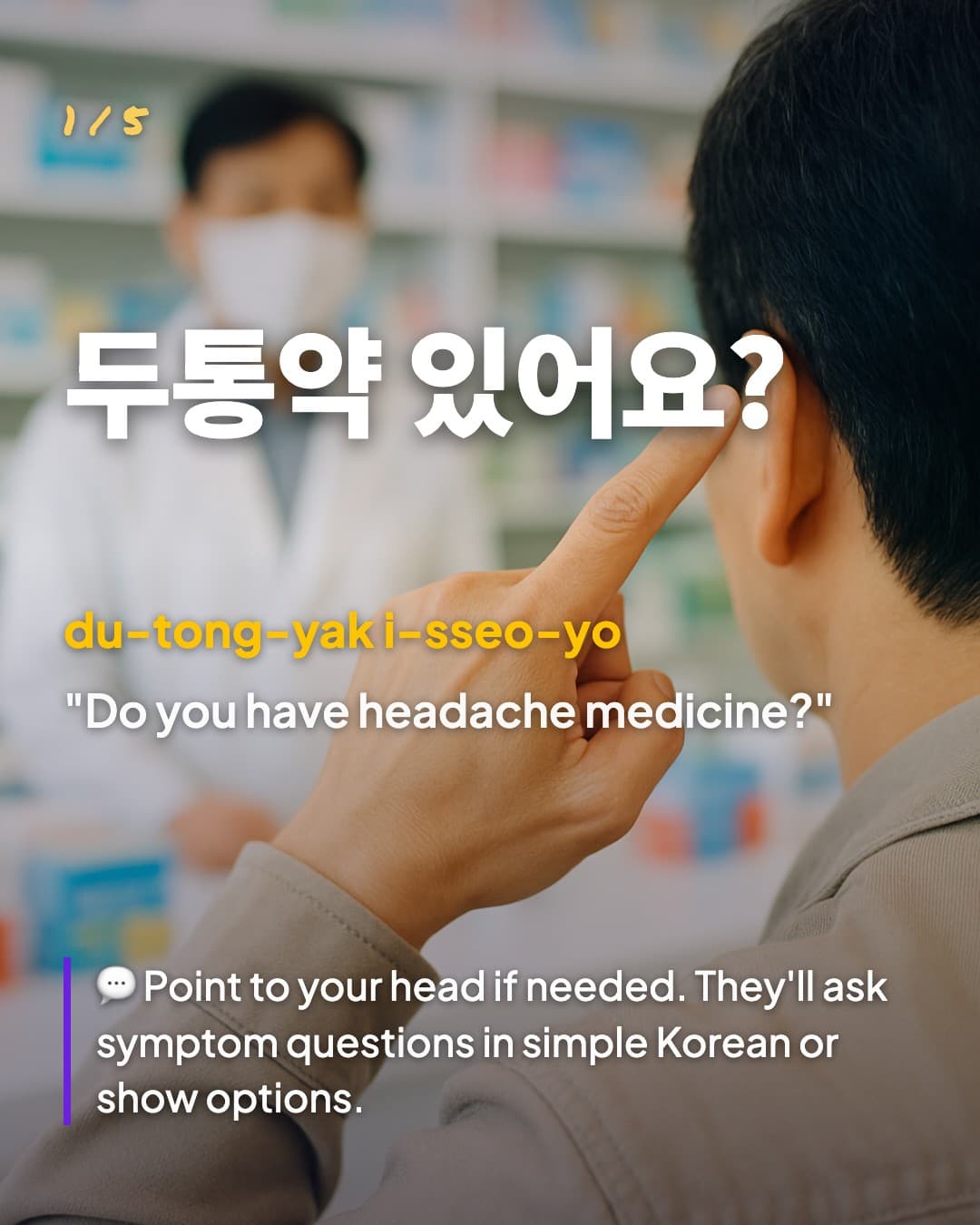
두통약 있어요? — Do you have headache medicine?
du-tong-yak i-sseo-yo · Use this when you wake up with a pounding headache after that soju night. The pharmacist will probably point to a few boxes on the wall and might ask if your stomach is sensitive. Nod if yes, shake if no. They'll hand you something gentle or fast acting based on your response.
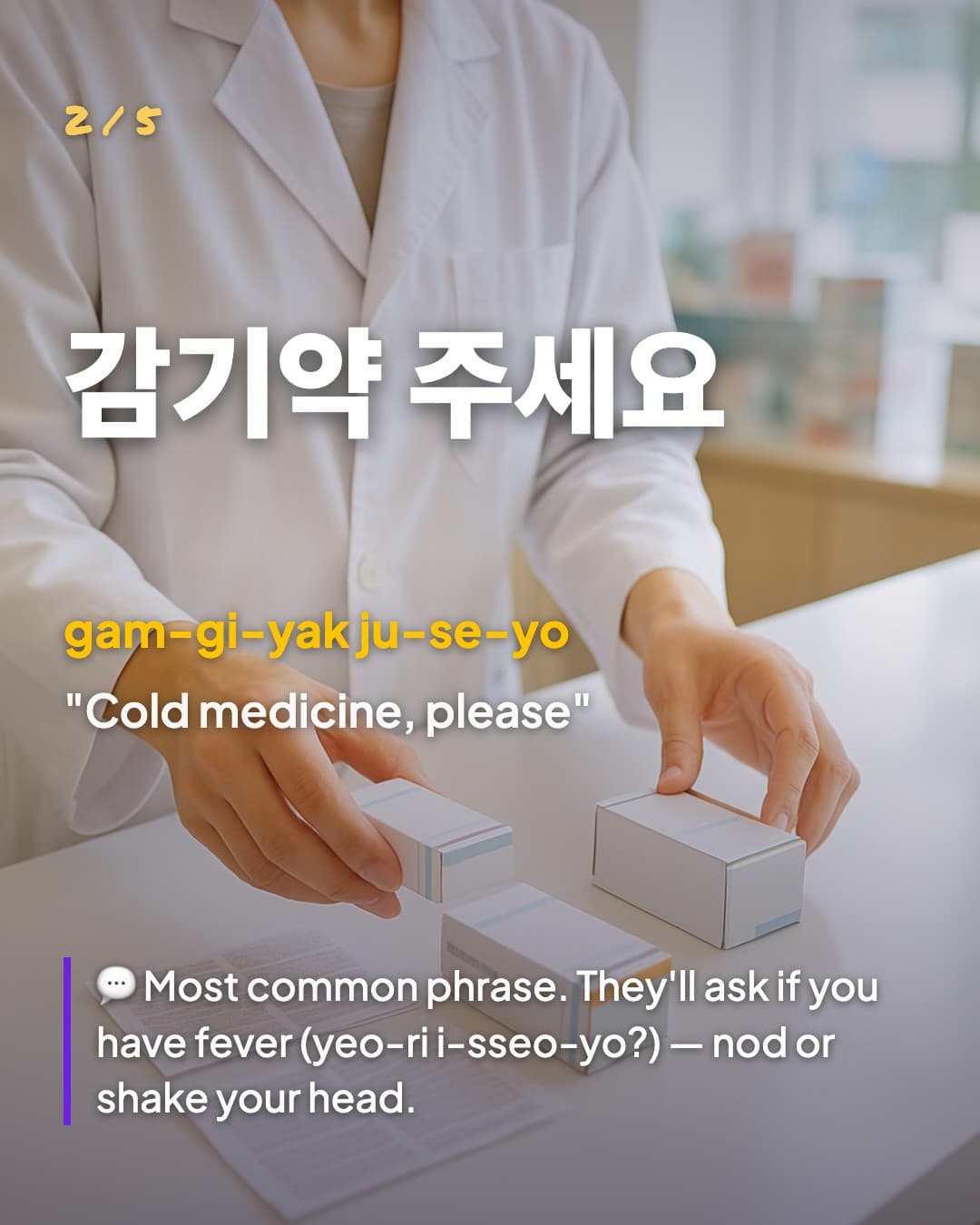
감기약 주세요 — Cold medicine, please
gam-gi-yak ju-se-yo · This is your go to from the moment you feel that airplane cold coming on. The pharmacist will likely touch their own forehead and look questioning, checking if you have a fever. They might also ask about a runny nose or cough with hand gestures. You'll walk out with a packet of pills and maybe some vitamin C tabs they'll toss in.
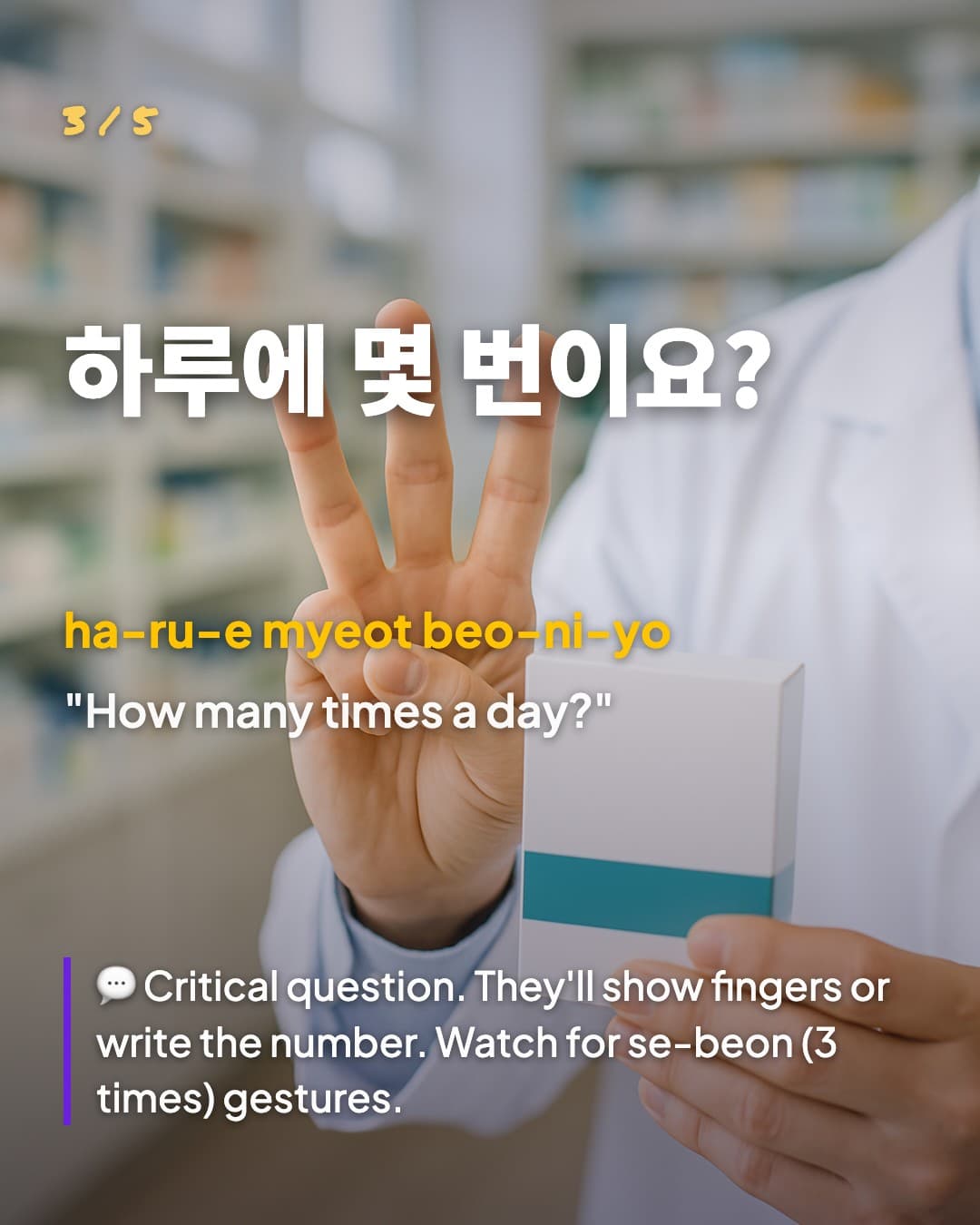
하루에 몇 번이요? — How many times a day?
ha-ru-e myeot beo-ni-yo · Ask this right after they hand you the medicine. Watch their fingers carefully. Three fingers means three times daily. They might also tap the counter in rhythm to show you. Some will grab a pen and write the number directly on your packet, which is incredibly helpful when you're back at your hotel.
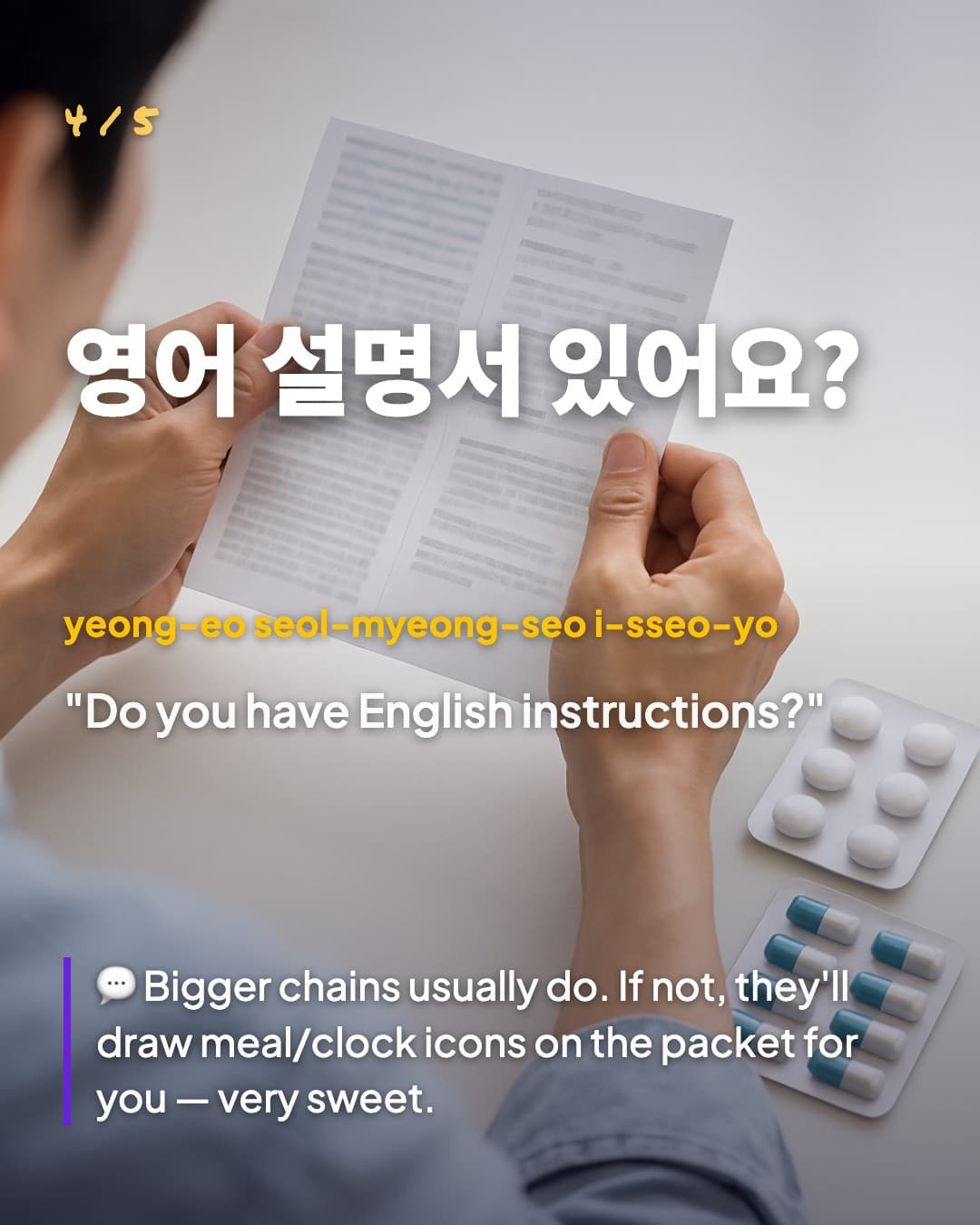
영어 설명서 있어요? — Do you have English instructions?
yeong-eo seol-myeong-seo i-sseo-yo · Bigger chains like Olive Young pharmacy sections often stock bilingual inserts. Independent neighborhood pharmacies might not, but don't worry. The pharmacist will often sketch little icons on the box: a spoon and bowl for after meals, or a moon for before bed. It's surprisingly clear and honestly pretty charming.
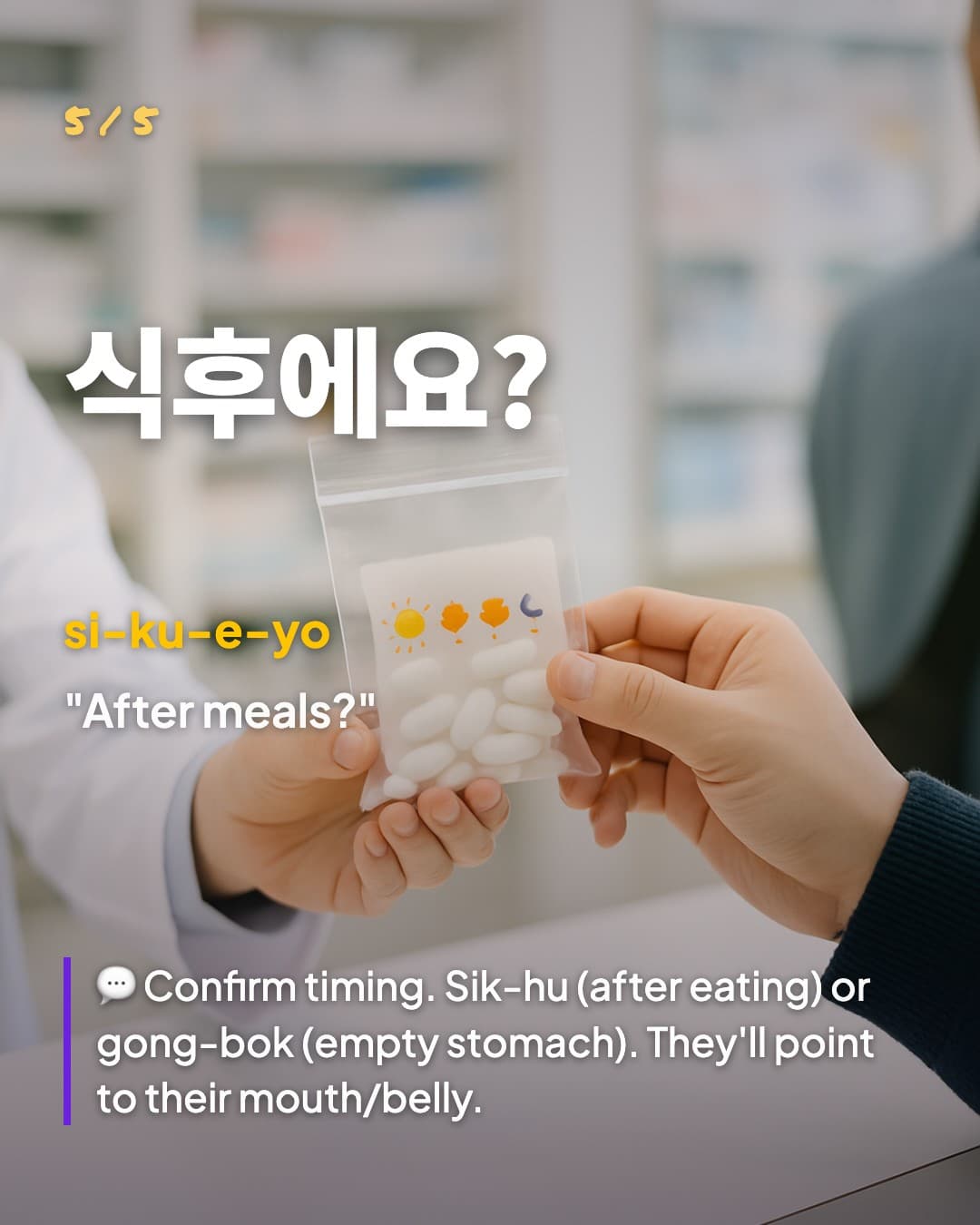
식후에요? — After meals?
si-ku-e-yo · This confirms whether to take it with food. The answer matters because some medicines work better on an empty stomach while others need food to avoid nausea. They'll usually mime eating or point to their belly and then show a thumbs up or down. If you see them patting their stomach after making an eating gesture, that means take it after you eat.
How to sound right
- The 'yo' ending makes everything polite, so always include it even if you rush the middle part.
- For 'myeot', try saying 'mee-yuht' quickly and it'll sound close enough.
- If you're stuck, showing the phrase on your phone works perfectly and pharmacists appreciate the effort.
FAQ
- Do Korean pharmacies accept foreign credit cards?
- Many Korean pharmacies accept foreign credit cards, but it can vary by store. Cash is often accepted too, and many medicines are affordable, depending on the product.
- Can I buy allergy medicine or pain relievers without these phrases?
- You can point and gesture your way through it, but knowing even one phrase makes the whole interaction smoother. Pharmacists will understand your needs faster and can give better recommendations when they know you're trying to communicate properly.
- What if the pharmacy is inside a hospital?
- Hospital pharmacies may have English-speaking staff or printed instructions. But they also get busier and move faster, so having these phrases ready keeps the line moving and shows respect for everyone's time.
Ask Bella
Seoul, Suwon

