Master Seoul's cafe culture in 5 phrases
Seoul's cafe scene is huge, but the menu dance gets awkward fast. Good news: you don't need fluent Korean. These 5 phrases cover 90% of what actually happens at the counter and table. Say them once, and staff will treat you like you know what you're up to.
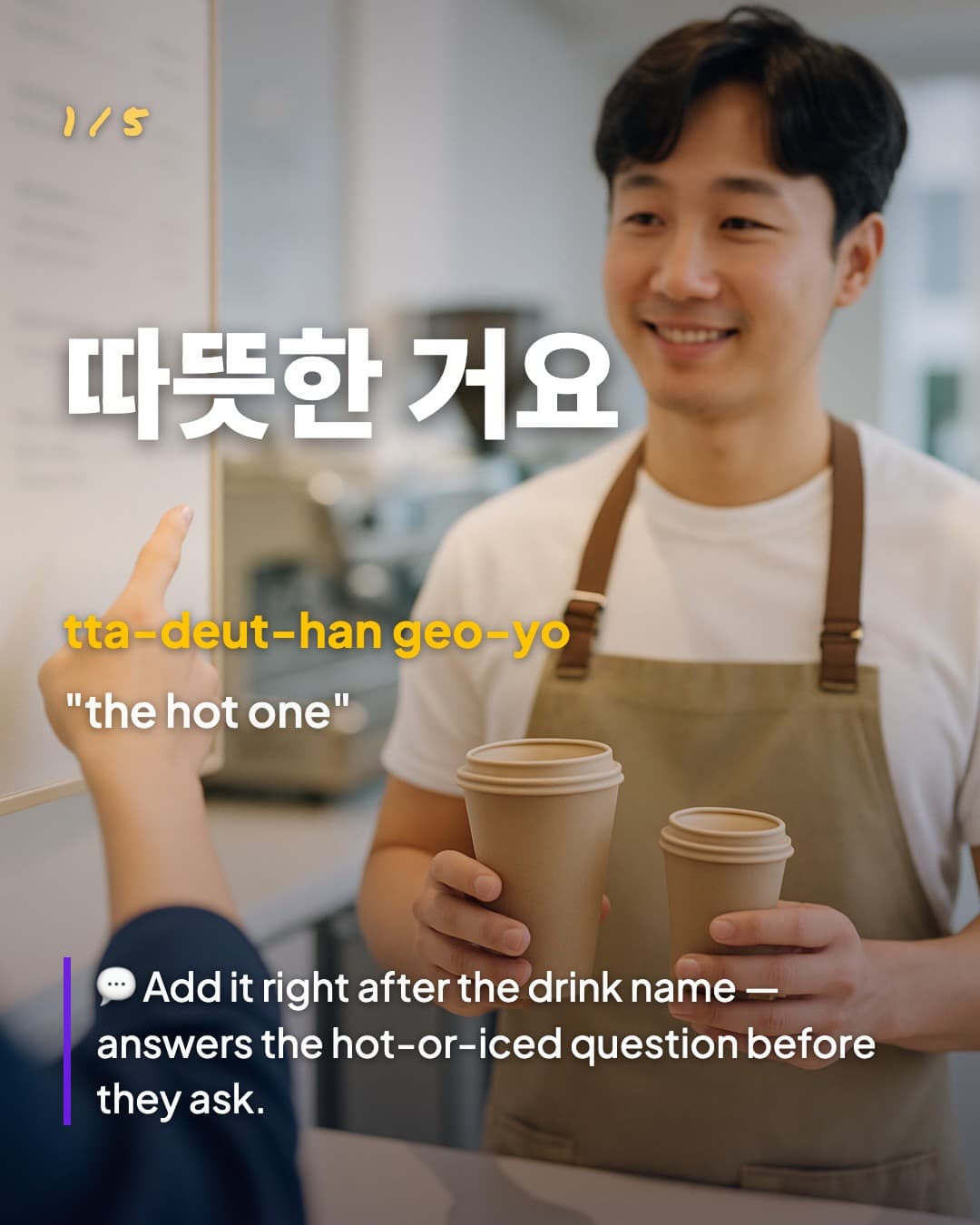
따뜻한 거요 — the hot one
tta-deut-han geo-yo · The barista will always ask hot or iced, and tourists usually freeze or point at the menu again. Skip that moment entirely by adding this right after your drink name: Americano tta-deut-han geo-yo. They'll smile and nod because you just answered before they asked. Works for any drink, and it sounds completely natural.
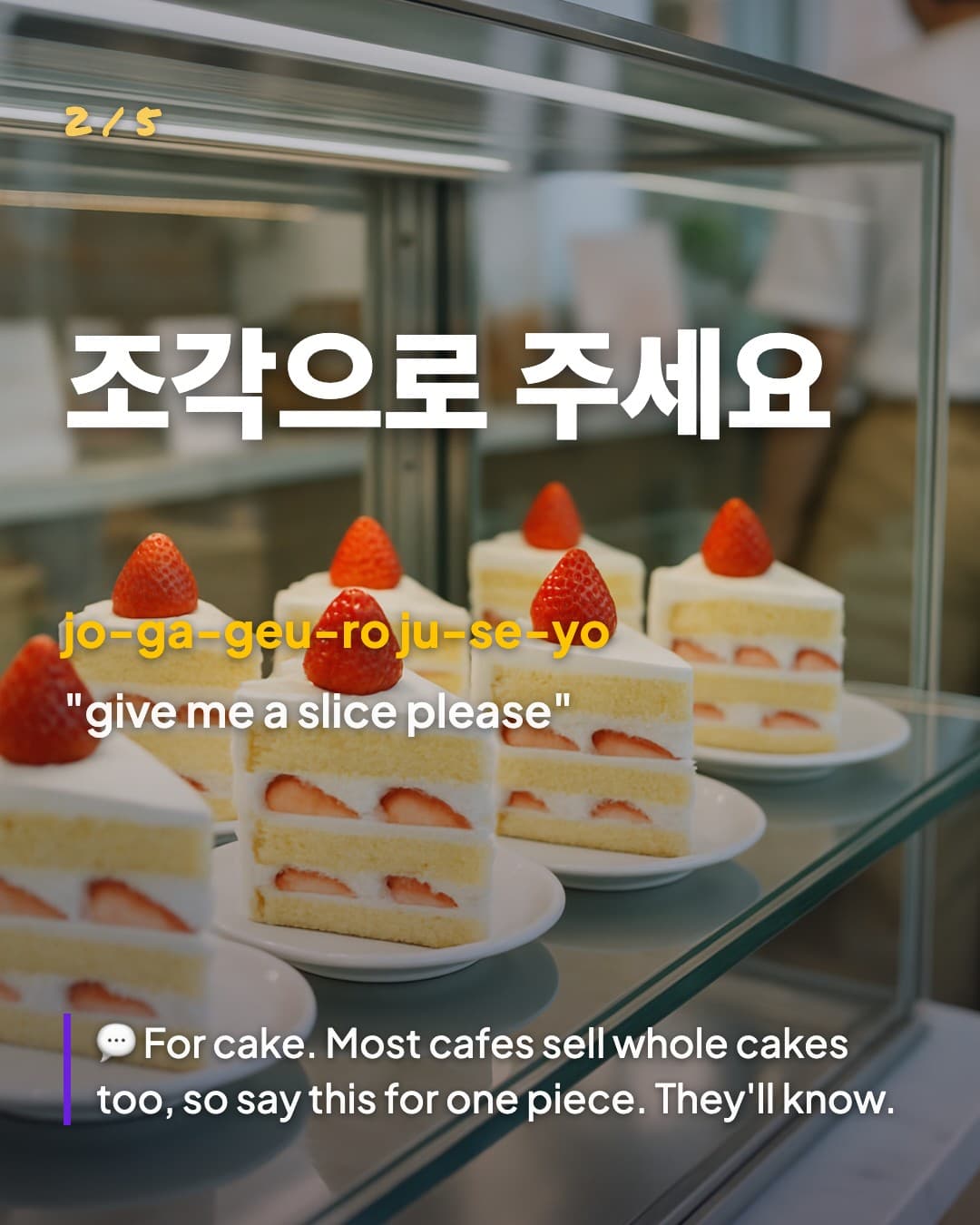
조각으로 주세요 — give me a slice please
jo-ga-geu-ro ju-se-yo · That gorgeous cake in the display case? It's probably a whole cake, not a slice. If you just point, they might bring you the entire thing and a bill that stings. Say this phrase at the counter and they'll cut you one perfect slice, plate it, and sometimes even ask which piece you want. It's the difference between 7,000 won and 35,000 won.
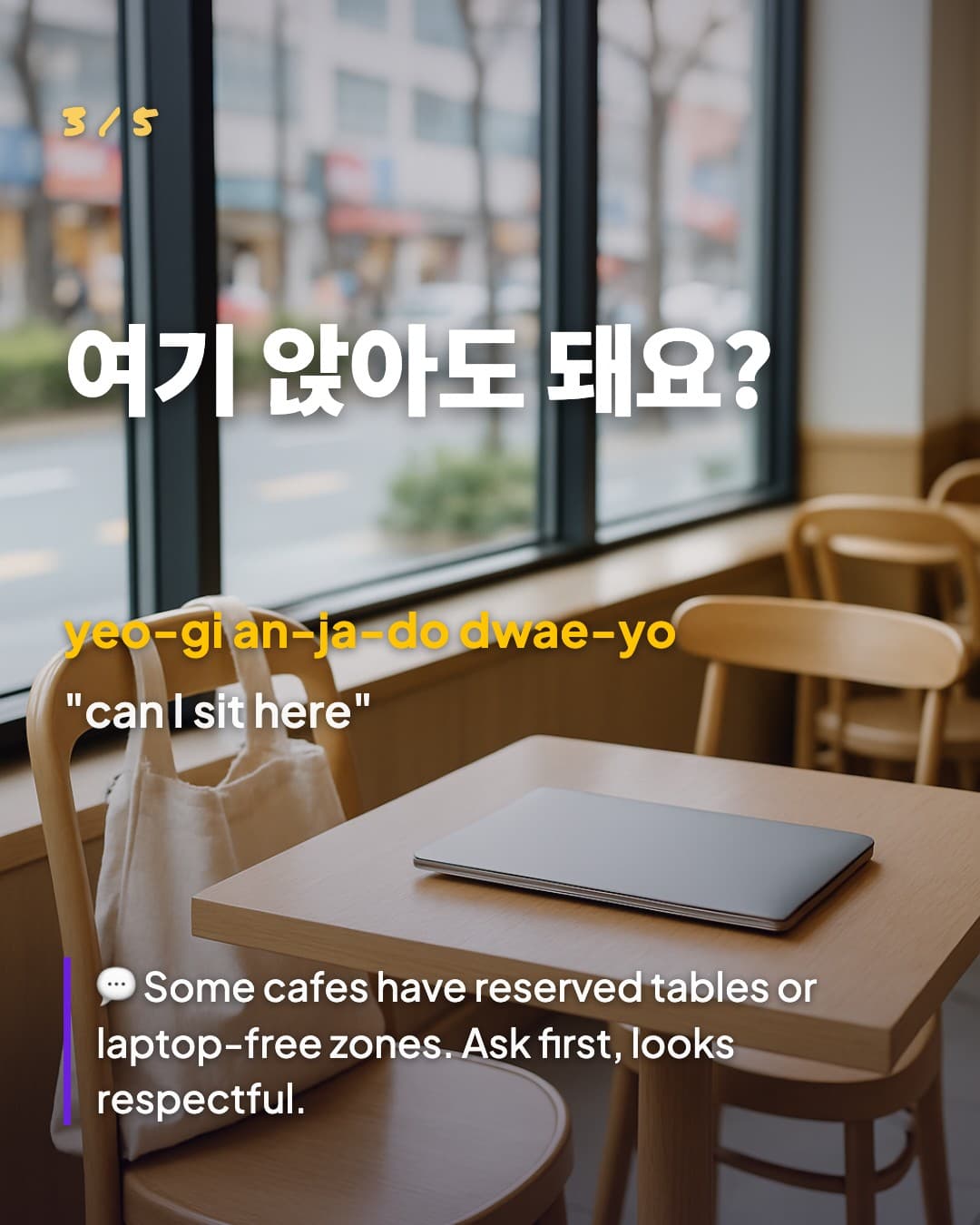
여기 앉아도 돼요? — can I sit here
yeo-gi an-ja-do dwae-yo · Korean cafes often have unspoken rules: reserved tables, study-only zones, or seats saved for groups. Locals ask before sitting, especially at shared tables or near windows. Use this phrase and you'll get either a quick nod or a hand gesture toward a better spot. It takes three seconds and saves you from awkward mid-coffee relocations.
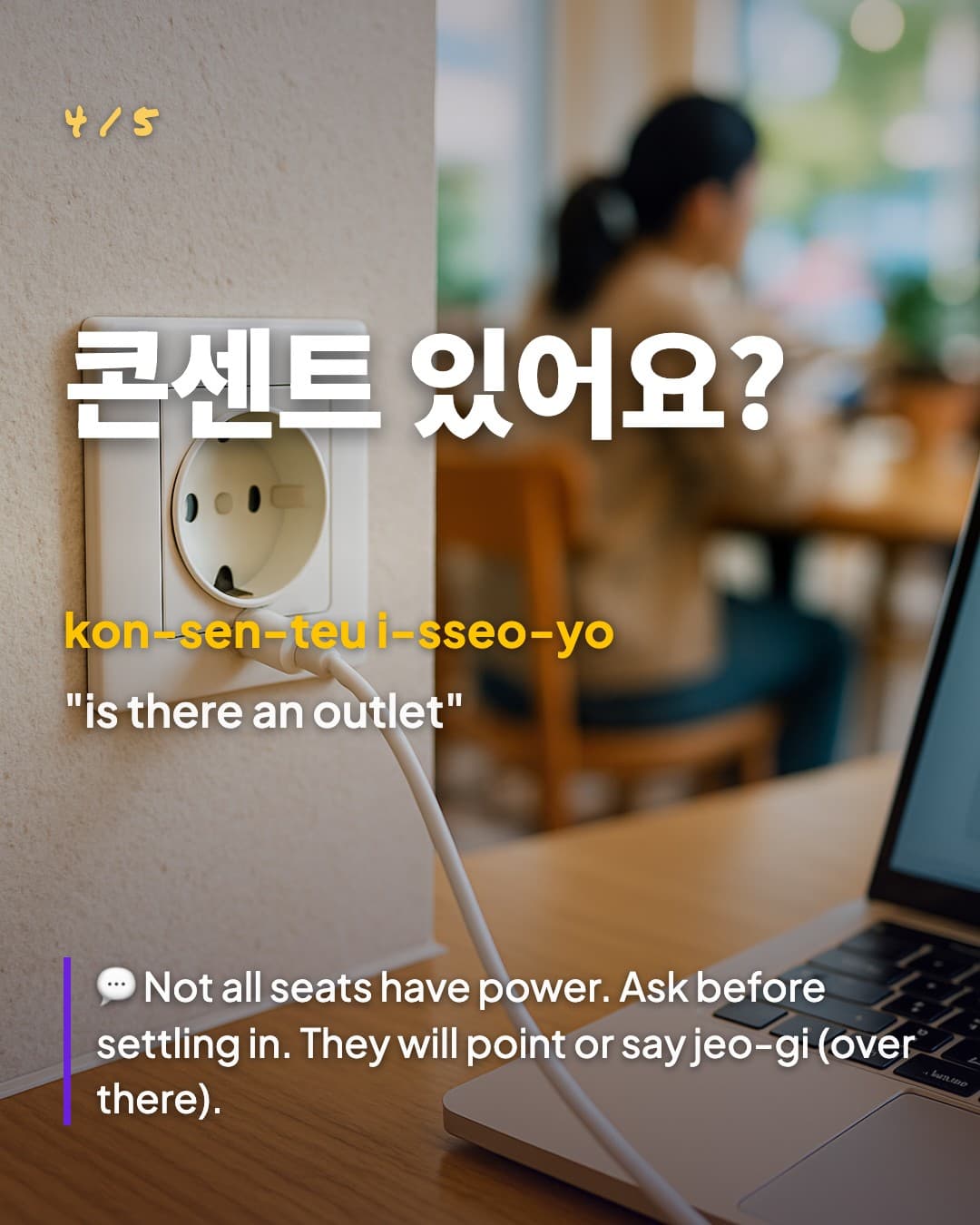
콘센트 있어요? — is there an outlet
kon-sen-teu i-sseo-yo · You found the perfect table, ordered your latte, opened your laptop, then realized there's no outlet within two meters. This phrase solves it before you settle in. Staff will either point across the room or say jeo-gi, which means over there. Some cafes have outlet maps on the wall, but asking is faster and they're always helpful about it.
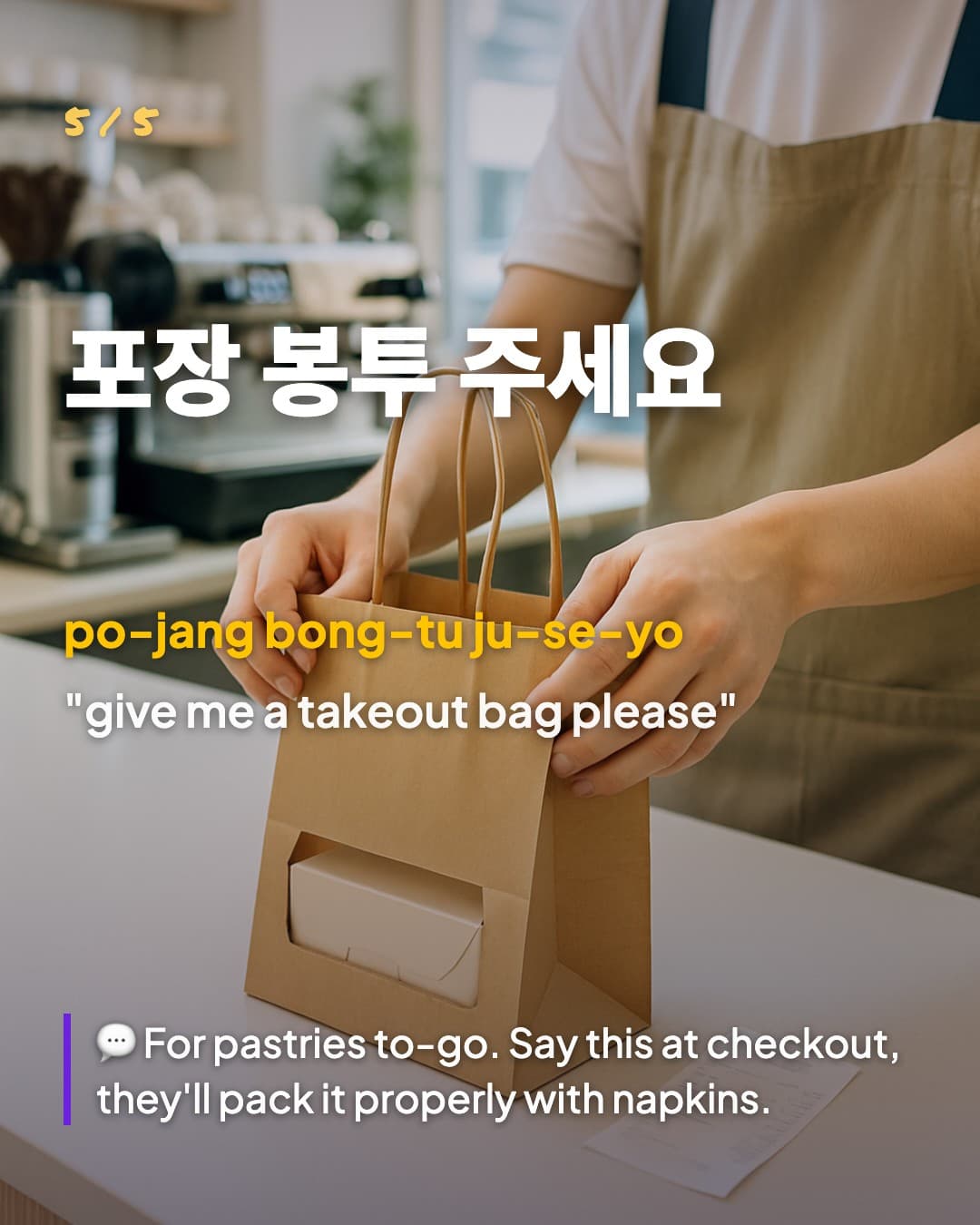
포장 봉투 주세요 — give me a takeout bag please
po-jang bong-tu ju-se-yo · You want that croissant or muffin for later, but the default is a tiny paper napkin. Say this at checkout and they'll pack it properly in a small bag with napkins and sometimes even a fork. It's especially useful when you're grabbing breakfast to take on the subway or back to your hotel. They'll appreciate that you asked in Korean.
How to sound right
- The yo ending makes everything polite, so never drop it when speaking to staff.
- Double consonants like tta sound tense and sharp, not stretched out, so make it quick and crisp.
- If they respond in fast Korean, just smile and say ne (yes) or gamsahamnida (thank you), they'll switch to gestures.
FAQ
- Do Seoul cafe staff speak English?
- In Gangnam, Itaewon, and Hongdae, many do. In neighborhood cafes, less common. But menus usually have photos and numbers, and these five phrases handle the gaps where pointing fails.
- Should I order at the counter or sit first?
- Always order and pay at the counter first in Korean cafes. They'll give you a number or buzzer, then you grab your seat. Skipping this confuses everyone.
- Is it rude to camp at a cafe with one drink?
- Seoul cafe culture is laptop-friendly, and people stay for hours. During peak lunch or dinner times, be mindful. Weekday afternoons and evenings? You're totally fine settling in.

Ask Jake
Seoul

